

The 6 fastest ways to build chemistry with your pickleball partner
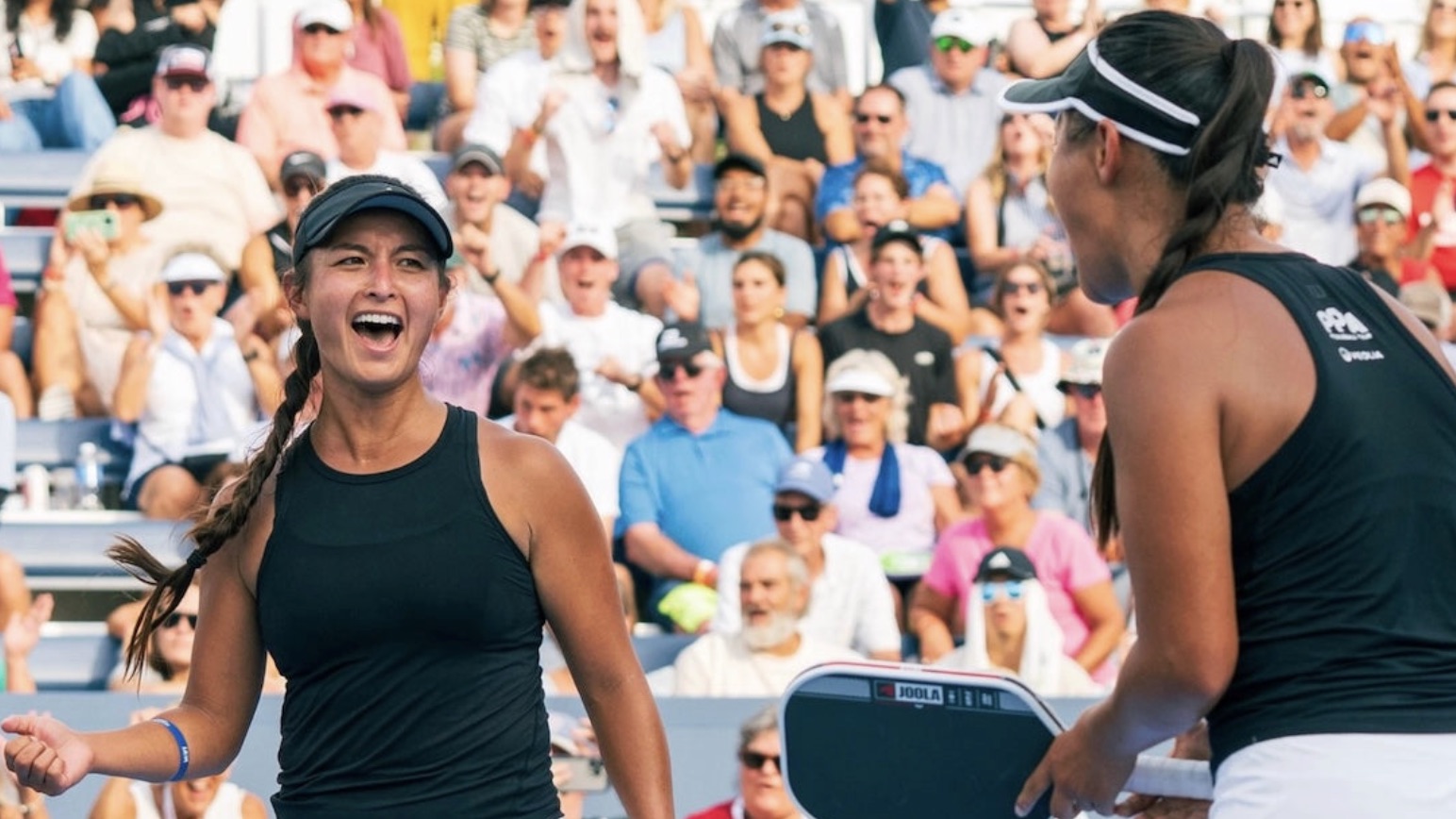
You’ve felt it both ways. Some partners you click with by the second game — covering for each other, calling the middle, laughing off the misses. Others, you spend the whole session a half-step out of sync and can’t explain why.
We tend to chalk it up to luck — we just have chemistry, or we just don’t.
But chemistry isn’t luck, and it isn’t magic.
Here’s what it actually is: Chemistry is what accumulates between two people when one reads the other — and keeps getting it right. Every time you catch what your partner needs and give it to them, you make a deposit. Enough deposits and you get that locked-in, two-minds-one-team feeling that everybody’s chasing.
Here’s the part nobody tells you: The deposits come in two currencies, and most pairs only know about one.
The first currency is connection, and it’s built in the good moments. Relationship researchers have found something surprising: How partners respond to each other’s good news predicts the health of the relationship even better than how they respond to the bad.
The telling question isn’t “Will you be there when things go wrong?” — it’s “Will you be there when things go right?”
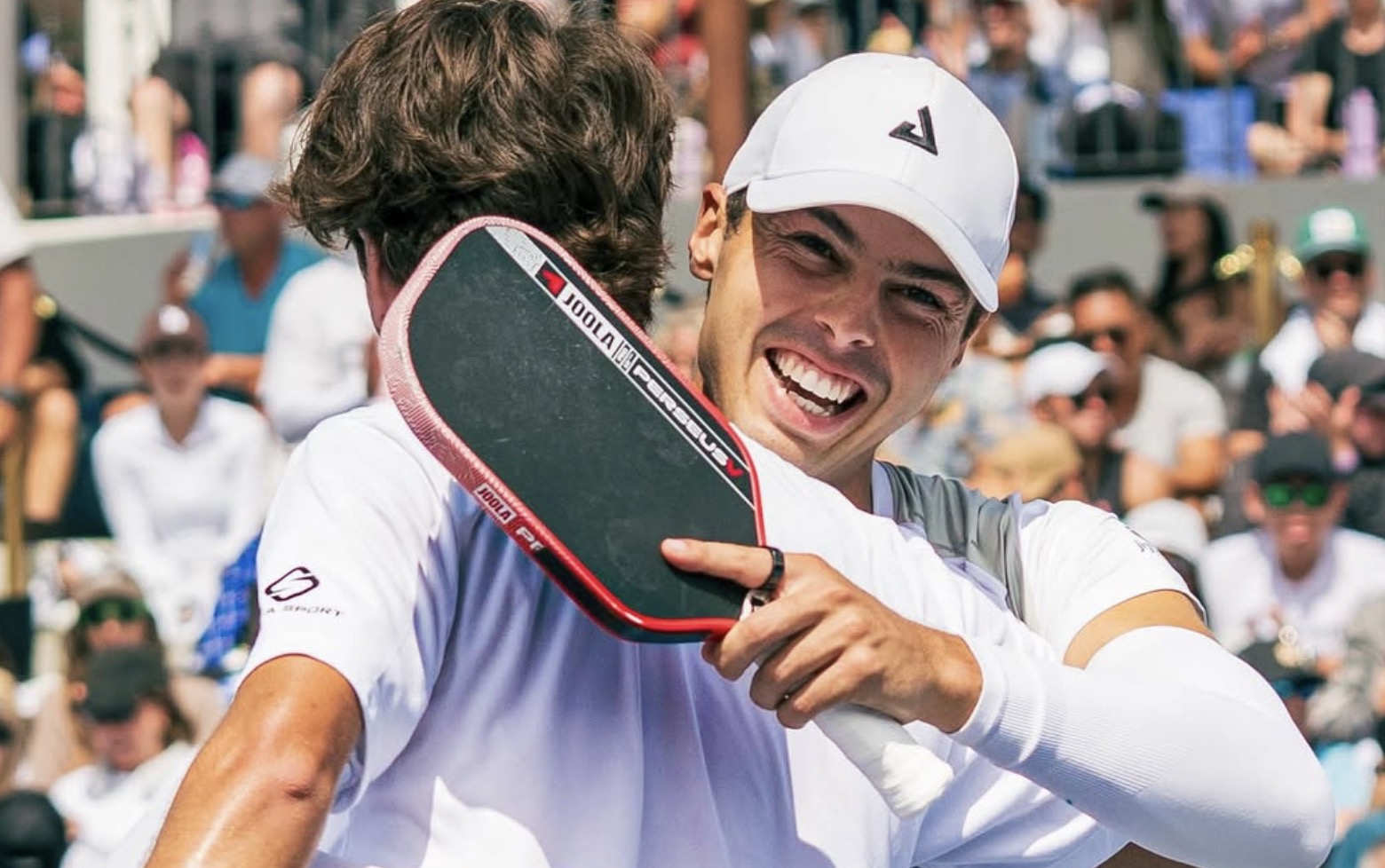
Researchers who tracked NBA teams found that the ones doing the most celebratory touching early in the season — fist bumps, high fives, chest bumps — performed better months later. Celebration isn’t fluff. It’s fuel.
The second currency is safety, and it’s built in the bad moments. How you handle your own shank, how you react to your partner’s, whether the two of you can find your way back from a 2–8 hole — those are the moments your partner is silently studying to learn whether you’re safe to play freely next to.
Connection makes the partnership feel good. Safety makes it hold.
A pair rich in only one currency is fragile. All celebration and no safety feels great until adversity hits and there’s no floor. All grit and no joy survives everything but never feels good enough to keep choosing each other. The pairs with real chemistry are making both kinds of deposits — and you can start making them on purpose your very next session.
Below are the six skills you need to develop to be the best partner at the courts. The first one is on you.
1. Know yourself
Before you can be a good partner, you have to know what you’re actually bringing to the court. What does your best pickleball feel like — loose and chatty, or quiet and locked in? What rattles you? How do you act when you’re down — louder, quieter, faster, harder on yourself? Most of us have never looked, so we show up as a mystery even to ourselves — which makes us hard to partner with. Spend one session just noticing your own patterns. You can’t offer a partner something you haven’t located in yourself first. At the bare minimum, make sure you’re mentally resetting between each point (more on that here).
2. Ask the hard questions up front
Most partners have never told each other how they actually work, so they spend a whole season learning it the slow, painful way — by guessing wrong in the middle of matches. Skip that part. Before you play, ask the questions that matter: What do you need from me when it’s going well? What about when it’s going sideways? Do you want feedback during the game or after? What gets in your head? Notice the questions cover both currencies — the good moments and the bad ones. Five honest minutes off the court will save you months of friction on it.
3. Celebrate their wins like they’re your own
This is the connection deposit most players fumble without realizing it. Your partner rips a clean winner down the line, and you give them a flat “nice” while you’re already setting up for the next point. To you, nothing happened. To them, something did: they learned their best moments don’t move you.
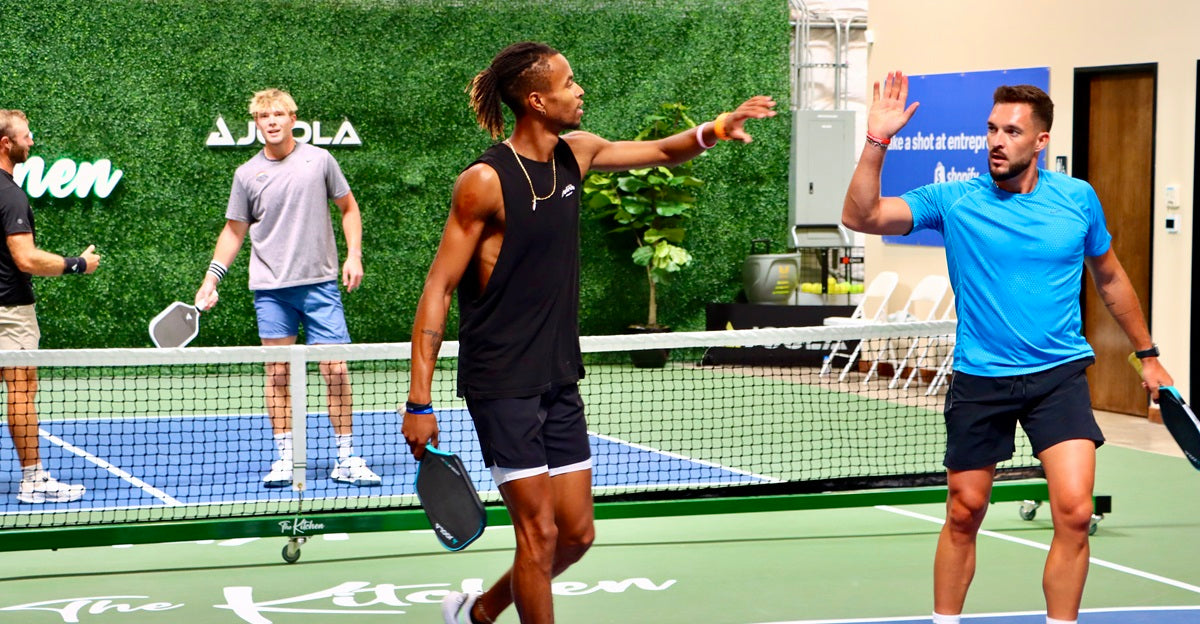
Flip it. When your partner hits a great shot, react — turn around, light up, make some noise, tap paddles like it was your own winner. Because it was: In doubles, their point is your point. It’s called “active” responding — engaged, energized, specific (“that backhand roll was filthy”) — and it’s the single most reliable connection-builder we know of. The pairs you envy at the courts, the ones that look like they’re having more fun than everybody else? Watch them after a winner. That’s not the chemistry showing. That’s the chemistry being built.
Read next: The Kitchen’s top 13 pickleball paddles on the market right now + in-depth reviews for each one
4. Make it safe to miss — starting with your own misses
This is the safety deposit, and it has two halves. Your misses first. After a shank, the instinct is to go quiet, drop your head, or silently beat yourself up. Do the opposite — say “My bad, next one.” It feels backward, but owning a mistake out loud tells your partner there’s nothing to defend here, no mood to manage, no eggshells to walk on. The player who can laugh off their own pop-up is the one everybody wants on their side of the kitchen.
Then the harder half: Your reaction to your partner’s misses matters even more than your reaction to your own. A flinch, a head shake, a long silence after they net one — they feel all of it, and they start playing scared, which makes them miss more. So flip it. Be generous: Roughly 10 small encouragements for every correction, and save the corrections for after the match, not between points. Every miss of theirs that you meet with steadiness is a deposit they will never forget. A partner who isn’t afraid of you swings freely — and free players win more.
5. Pick a reconnect signal
Every partnership hits rough patches mid-match — the 2–8 hole, the string of unforced errors, the call that didn’t go your way. What separates the pairs that climb out from the pairs that quietly come apart is having a way back to each other before they need it. Pick a signal together that you agree to use when you need to come back together: a paddle tap, a check-in, one word with eye contact (“reset,” “next one,” “right now”). It doesn’t have to be fancy. It has to be agreed on, so it fires automatically when things get tight instead of when you happen to remember it. A signal like that is a promise made in calm waters that pays out in rough ones.
6. Create rituals around the process — together
The signal handles the hard moments. Rituals handle everything around them — the warm-up you always do together, the check-in before each game, the quick “good game, one thing for next time” after, the text the morning following a tournament. They sound small. They’re not. Rituals are how a partnership tells itself, over and over, we’re in this together.
And notice the word doing the work in that sentence: We. Listen to the pairs that have real chemistry and you’ll hear it constantly — we got tight, we’ll get the next one, we figured it out. Never “I killed.” Never “You struggled.” The “we” isn’t a nicety; it’s both currencies in one syllable — the wins belong to the team, the misses belong to the team, and nobody gets left alone with either. It’s the most powerful word on this list, and the surest sign the chemistry is already built.
PLAY WITH THE PADDLE BEN JOHNS USES
The JOOLA Pro V is one of the highest-performing paddles on the market right now.
Final thoughts
Chemistry isn’t something you wait around for. It’s two currencies, deposited one moment at a time.
Celebrate their wins like your own, miss well together and ritualize the connection so neither ever has to wonder. Put these six in place on purpose and you’ll build in a few weeks what most pairs hope shows up by accident.
Try one this week. Then add the next.
Amanda Sovik-Johnston, Ph.D. is a Licensed Clinical Psychologist, competitive doubles pickleball player, and the founder of The Connected Competitor, where she applies sports psychology to competitive partnerships. Follow her on Instagram @theconnectedcompetitor or on the web at www.theconnectedcompetitor.com.