
Who could challenge the top seeds next PPA Tour season?
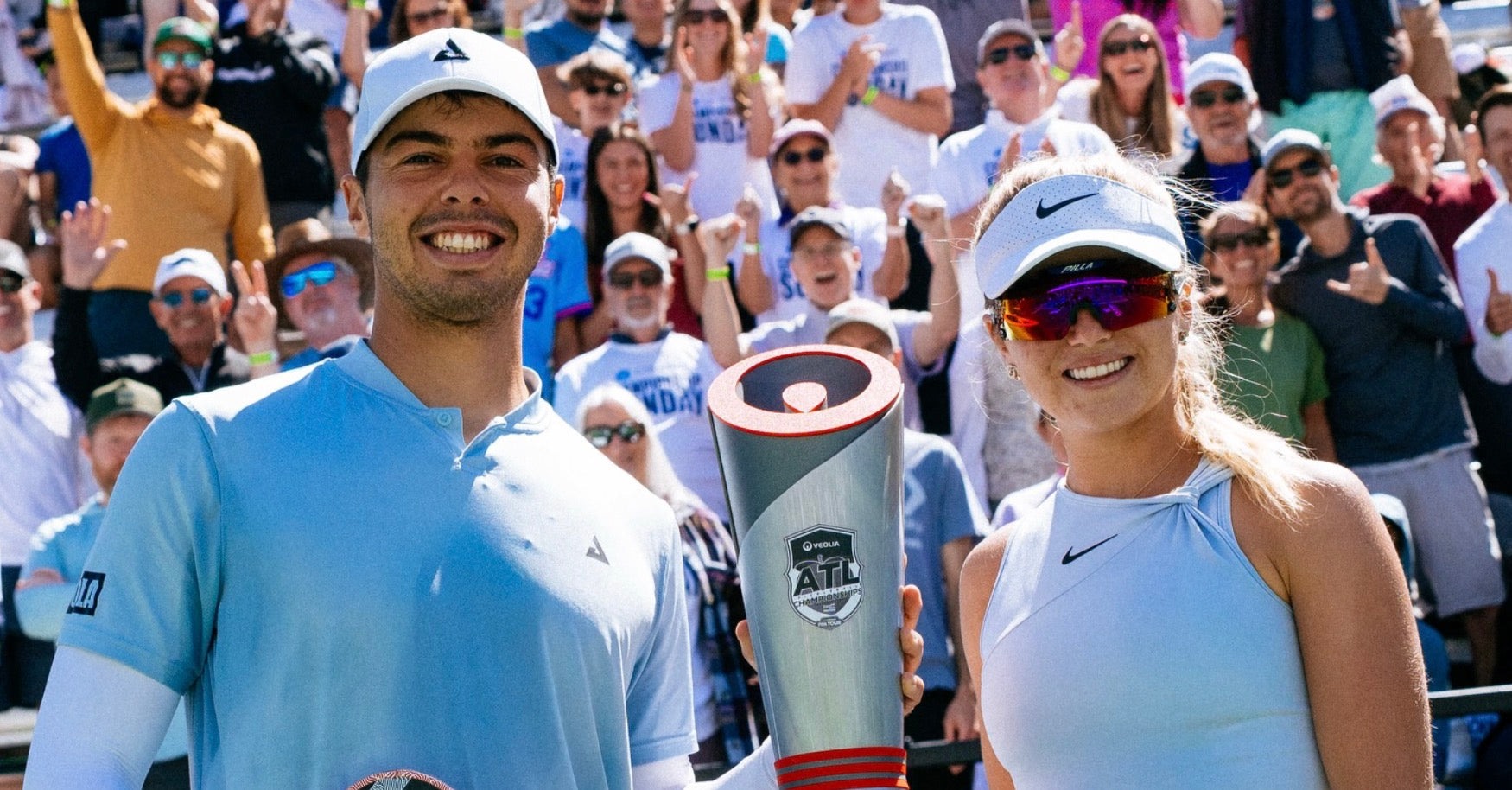
Toward the end of 2025 and early in 2026, it seemed that some teams were closing in on the top seeds in the PPA Tour doubles divisions.
In the fall, Tyra Black/Jorja Johnson beat Anna Leigh Waters/Anna Bright in Las Vegas, then Jackie and Jade Kawamoto beat them again in Cincinnati.
In men’s doubles, Hayden Patriquin/Federico Staksrud beat Ben Johns/Gabe Tardio at the Pickleball World Championships in November, then Patriquin/Bright took down Johns/Waters in mixed at the Mesa Cup this spring.

Then Johns and Waters did what great players do: They made adjustments and hit a new gear, dominating the final six events of the PPA Tour’s 2025-26 season and cruising to wins at the PPA Tour Finals last week.
Here’s how their records shook out in their 2026 events:
Men’s doubles — Ben Johns/Gabe Tardio: 45-0, 9 gold medals (10 if you count the PPA Tour Asia Hanoi Cup).
Women’s doubles — Anna Leigh Waters/Anna Bright: 45-0, 9 gold medals (10 if you count the PPA Tour Asia Hanoi Cup).
Mixed doubles — Anna Leigh Waters/Ben Johns: 46-1, 7 gold medals, 1 silver medal (8 golds if you count the PPA Tour Asia Hanoi Cup).
In the PPA Finals, all three gold-medal matches in the doubles divisions were three-game sweeps, and none of the games were particularly close.
So, where does this leave us? As fans I think we can all agree that contested tournaments and close finals make for a better viewing experience. But Johns and Waters are clearly a step ahead of the rest of the field.
In this article, we’ll take a closer look at some partnerships that might be able to challenge the top seeds when the PPA Tour begins its 2026-27 season in the fall.
Read next: Our reviewers’ Top 13 pickleball paddles on the market right now + in-depth reviews for each one
Who can mount the challenge
Below we will do some speculation and suggesting about players who could combine to form more effective combinations to challenge the top seeds. We are building to win (or at least have a chance of winning) the championship.
Where there is a team that is already set in stone (like JW and Jorja Johnson), we will respect that team’s structure and instead suggest some other teams that might have what it takes. We will also provide some big picture strategic pieces that inform the process.
Men’s doubles
To have a chance against Johns and Tardio, you either need to outwork them (extremely difficult) or disrupt them (difficult but easier than outworking them).
The teams below are designed to be able to put in the work (like Staksrud hanging with Johns in the cross court dink for a reasonable time and also looking for the roll if the dink is a bit off) or disrupt (like JW playing on the right and dialing up the straightforward aggression).
There are seven players in the mix to challenge in the men’s doubles division:
Hayden Patriquin
Federico Staksrud
JW Johnson
Andrei Daescu
Christian Alshon
Eric Oncins
CJ Klinger
Here are the combinations that have a shot, in our order of likely success:
1. Hayden Patriquin (left) and JW Johnson (right)
Hear me out here. Johnson is playing on the wrong side. He has the fastest hands in pickleball. Putting his backhand on the far left side of the court wastes such a powerful weapon. He is not a particularly good roller of the ball (a la Ben Johns). He is more of a backhand flicker (a la Gabe Tardio). I do not know if Johnson would ever be open to this. But if he is, this would be a dangerous team.
2. Federico Staksrud (left) and JW Johnson (right)
I was torn between Patriquin or Staksrud in my rankings. I give Patriquin a slight edge just because he has still not reached his ceiling, but I could be wrong on the order. Staksrud on the left and Johnson on the right is a mirror of Ben and Gabe. Staksrud’s entire style of play is modeled after Johns, and Johnson is the closest right side player to Tardio in the field. Tardio is better off the bounce and also has a better feel for initiating from the middle, but Johnson has faster hands and is more dangerous on the backhand out of the air.
3. Hayden Patriquin (left) and Federico Staksrud (right)
They didn’t switch to this formation until the very end of 2025, and when they did they saw success with the win at Worlds. But they split soon after. I would like to see more of this team with Patriquin on the left.
4. Andrei Daescu (left) and Christian Alshon (right)
This team won 3 gold medals together in 2025, including a win over Johns and Tardio, but all of those wins came in the first half of the year.
5. Eric Oncins (left) and CJ Klinger (right)
This team would be a dark horse, but both players have the ability to be disruptive to the steady play of Johns. They’re the kind of team who could get hot and win, but also lose in the Round of 16.
Looking to upgrade your paddle?
The JOOLA Pro V is one of the highest-performing paddles on the market right now.
Women’s doubles
Defeating Waters and Bright – especially in a 5-game match – will prove a daunting task. To defeat them, the team will need top tier court positioning and defense (a la the Kawamotos), consistent heavy topspin dinking (a la Rachel Rohrbacher), plus excellent put away power (a la Parris Todd). It helps to have a dash of court vision and offensive creation (a la Jorja Johnson).
There are, again, seven players in the mix to challenge in the women’s doubles division:
Jade Kawamoto
Jackie Kawamoto
Paris Todd
Rachel Rohrbacher
Jorja Johnson
Tyra Black
Meghan Dizon
Here are the teams that have a shot – in our order of likely success:
1. Jackie (left) and Jade Kawamoto (right)
They have most consistently shown the ability to challenge Waters and Bright, although their last try did not go especially well — they lost 11-3, 11-2 in Atlanta (but hadn’t played for a couple months before that tournament). They are able to grind better than any other team, but there is one piece – and one piece only from our estimation – that is holding the Kawamoto sisters back from evening with Waters and Bright: Putaway power. They have every other necessary piece of the puzzle. The difference is that Waters and Bright can put the ball away at a higher rate than them. Fix that – and watch out!
2. Paris Todd (left) and Rachel Rohrbacher (right)
This team is an interesting combination. For our money, Rohrabacher may be the best right side player in the women’s doubles game. Her ability to anchor that side and create offense is second to none. And Todd is the best all-around women’s player on the tour without Anna in her name. If this team gels so that each player clearly knows their role and can achieve top tier court coverage, they should be able to challenge the top seeds week in and week out.
3. Tyra Black (left) and Jorja Johnson (right)
This is another powerful combination, but they need more consistency. Both players can get into a pattern of short hopping their dinks and that will not cut it against the top seeds. For them to be successful, they will have to match the aggressiveness of Waters’ and Bright’s dinking.
4. Jackie Kawamoto (left) and Jorja Johnson or Meghan Dizon (right)
There has been some talk that playing together can prove stressful for the Kawamoto sisters. These are two possible combinations that involve Jackie. Johnson is an easy right side pick here. But, in case we need a back up, to my eye, Dizon is one of the most underrated players in the tour. She has always had top-tier put away power. Her defense has much improved and she may be poised to make a run.
5. Tyra Black or Jorja Johnson (left) and Jade Kawamoto (light)
Tyra is a natural left side player. Johnson on the left could be interesting. I would be curious to see what she can do when given more room to operate
We tested 15 of the most popular power paddles …
Mixed doubles
While the other two divisions were difficult, this one seems almost impossible. You have the two undisputed best players in each gender discipline who have now played together for several years. If one player is a bit off, they still have the other best player.
Here we are going to talk about teams – not players. There are several teams that are already formed and are expected to continue. We will offer strategic advice. We will also offer a couple of teams that might be a dark horse challenge in this division.
1. Hayden Patriquin and Anna Bright
They’ve hit some bumps in the road recently, but are still the top contenders in this division. The key for this team is balance. Patriquin can play big, but not too big. His partner is no slouch and letting Bright develop some offensive opportunities for him will improve their chances. No matter what, to have the best chance they need play on the upper edge of the aggression scale. Otherwise, Ben and ALW will just grind them down.
2. The Johnsons
JW and Jorja have fallen off a bit since reaching the zenith in 2025. From our perspective, this team is built for aggression and hands battles. Jorja can attack and counterattack with most and JW still has the fastest hands in the game. The grind style that they have opted for recently doesn’t capitalize on their strengths, but rather plays into the strengths of the No. 1 Seed.
3. Christian Alshon and Rachel Rohrbacher
This is an interesting team, and they had some solid results together this spring. Alshon is one of the longer players on tour. If he can find the right balance of “big” while allowing Rohrabacher to do her thing from the right side, they could be dangerous.
4. The Dark Horses
Here are 3 men and 3 women who could combine to make some noise in the mixed doubles division. No matter the formation, they will need some time to season as a team. If these players bounce around, they will have a hard time being successful.
MEN
Jay Devilliers: The flying Frenchman excels at the mixed game.
Eric Oncins: His length and putaway power makes him a threat.
Noe Khlif: He has proven to be a threat in mixed with solid results next to Tina Pisnik this spring.
WOMEN
Paris Todd: The best women’s player not already listed above.
Meghan Dizon: Underrated right-side player.
Tina Pisnik: A rock on the court
5. The “backward” option — Tyra Black and CJ Klinger
Here we go “backward” with a lefty man and a women’s player who prefers the left side. These teams wreak havoc with the regular patterns that teams, even the No. 1 seed, employ. That disruption – plus good play – might be enough to get them over the top.
Conclusion
These teams forming does not make any of them the favorite. The top team in each division is so far ahead of the field right now that they are the odds-on favorites in every tournament for the rest of 2026.
To put this in perspective, if you and I were placing a friendly wager of a on the outcome of a tournament and you had first pick, would you choose the top team or would you choose the field? Based on this spring’s results, the top team would be the best bet.
When one team is the better choice over the entire rest of the field of teams, there is an extreme imbalance in the sport. Right now, even the teams we proposed would remain underdogs in any match (particularly a 5-game match) against the top team.
But, over time, those odds would likely continue to improve as the teams gel.
Coaching Tip: It is much more productive to think about your game in terms of odds. The idea is not to find a 100% strategy in your play. It’s about shifting the odds. Sometimes you can do this from less than even (35%) to better than even (55%), but more often it’s about shifting odds in the positive direction, even if you remain the underdog.
The offer
As good as these players are, they will be facing one of the top strategists in the game: Ben Johns or Anna Leigh Waters (or both). And each of them has access to other top strategists: Ben’s brother, Collin or ALW’s mother, Leigh. So the team will need someone to help them crack the code.
And here’s the offer: I am willing to provide strategic coaching to the first of the above teams that reaches out. And I will do it on a success basis – only if we win.
If you’re looking for more insights into high-level pickleball, the Better Pickleball Academy has you covered. You’ll also gain access to their easy to use “BP Play Guides” including middle dinking patterns and more. Use code “KITCHEN26” at checkout for a special offer just for Kitchen community members (3 months for the price of 2).
Tony Roig is a nationally-recognized coach, Sr. Pro Player, developer of “Respect the X” on the In2Pickle YouTube channel, and the voice behind the Pickleball Therapy podcast. Visit BetterPickleball.com for information on coaching from Tony and the BP team through their Camps, Academy, and No. 1 online training program: The Pickleball System.