

Expert review: New Avoura pickleball paddles offer great spin and maneuverability
This page contains affiliate links. The Kitchen may earn a commission from purchases at no extra cost to you.
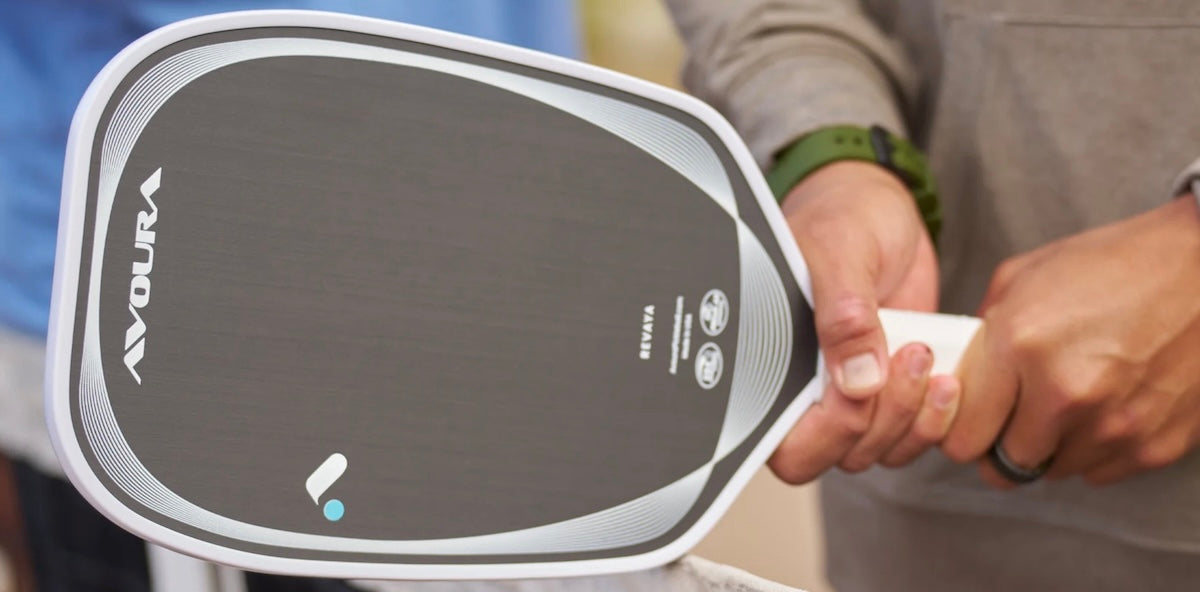
Avoura is still a relatively new brand in the pickleball paddle scene, but already they are making waves with their unique shapes and construction methods.
The first Avoura paddle — the Rhapsody 13 — was released earlier this spring and was notable for its rounded widebody profile. The Rhapsody 13 is generally considered a control-oriented paddle with great forgiveness.
This month the brand is releasing two more paddles designed with different types of players in mind.
Avoura Rivelle (Hybrid): Hybrid shape optimized for balanced power, touch and speed.
Avoura Revaya (Elongated): Extended reach while maintaining a forgiving strike zone.
Use code KITCHEN for $10 off on the Avoura website.
We’ll dive more into how each paddle performs below, but all three models feature technology unique to Avoura.
Sweet spot optimization: Avoura has engineered the widest part of each paddle to align with the equator of the sweet spot. This geometry, combined with their internal weighting system, is meant to create a more forgiving, stable paddle.
Internal weighting system: Avoura melts iron into silicon to create a metallic weighted gel, which is injected around the perimeter of the core. This increases paddle stability, enhances the sweet spot and absorbs shock — resulting in a paddle that feels very consistent.
One of the biggest things that stood out to me with all three of the Avoura paddles was how easy it was to generate spin. This was especially true with the Rivelle model, which was a very fun paddle to play with because I could be very precise and deceptive with my shots.
All of these paddles are also made in the United States, which Avoura says allows them to experiment with new designs faster and ensure consistent quality from paddle to paddle.
Avoura’s design process is driven by Pickleball Hall-of-Famer Jennifer Dawson, Steve Dawson and pro player Callan Dawson.
I’ve had these paddles for a couple weeks and have put them through my usual testing from the baseline, in the transition zone and at the kitchen line, as well as 5.0+ game play.
Below are my thoughts on how they vary in performance and what type of player would be well-suited to each model.