

Expert review: Paddletek launches new ‘Reserve’ program, releases first full-foam paddle
This page contains affiliate links. The Kitchen may earn a commission from purchases at no extra cost to you.
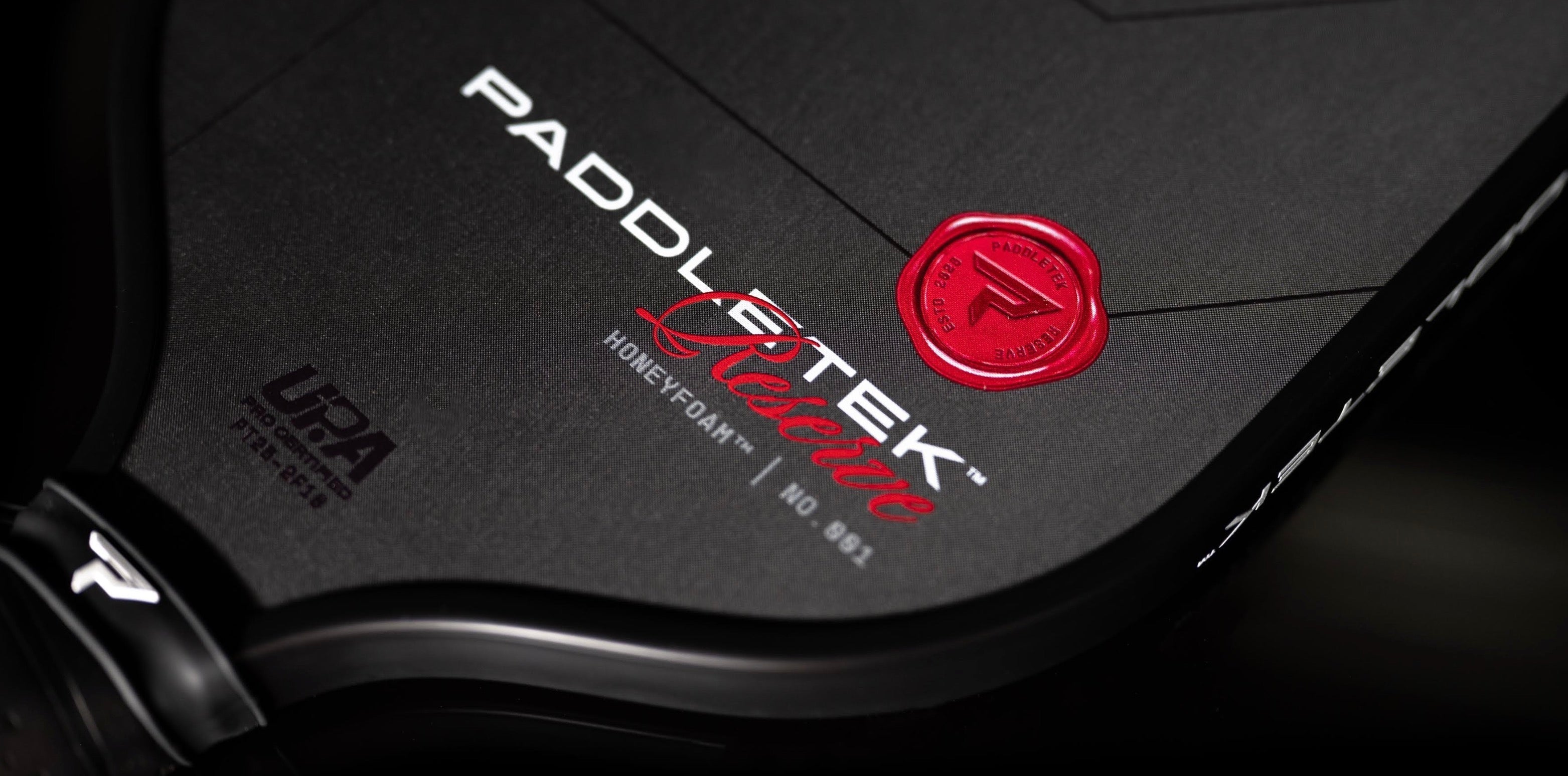
Following last month’s announcement of the creation of Paddletek Group, which unites Paddletek, ProXR and Yobow under one brand, the company is launching a new program meant to give players an early look at the latest paddle technology in the game.
The Paddletek Reserve campaign will offer “limited-release paddles” showcasing the “latest breakthroughs coming straight from Paddletek’s product experts and engineers, catching attention in our labs and on the court.”
The first paddle that is part of the program was released Tuesday — it’s called the Reserve Honeyfoam and features a “multi-foam floating core that is designed to expand the sweet spot and lengthen dwell time.”
Shop the Paddletek Reserve Honeyfoam
Use code “KITCHEN” at checkout for 10% off
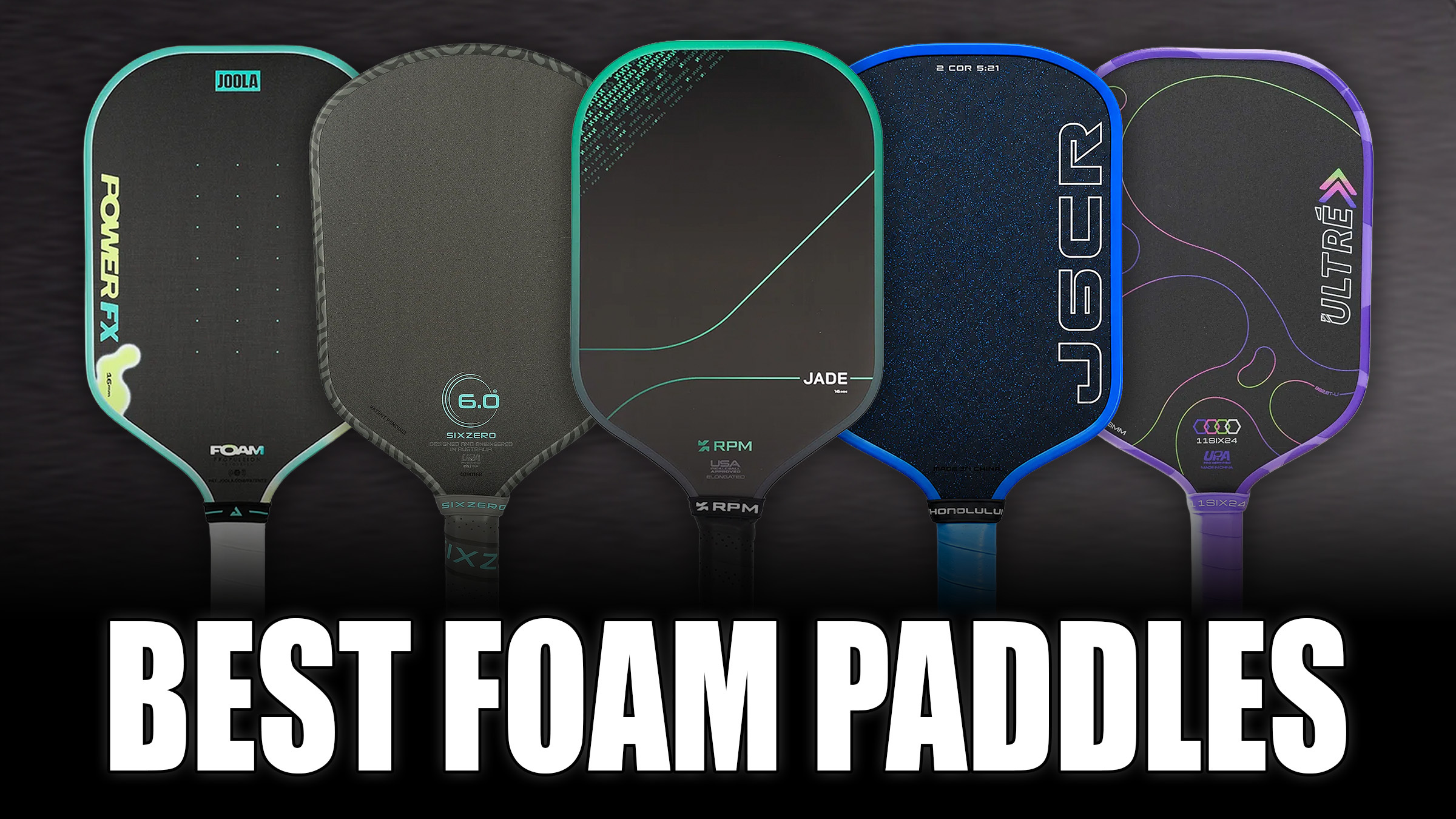
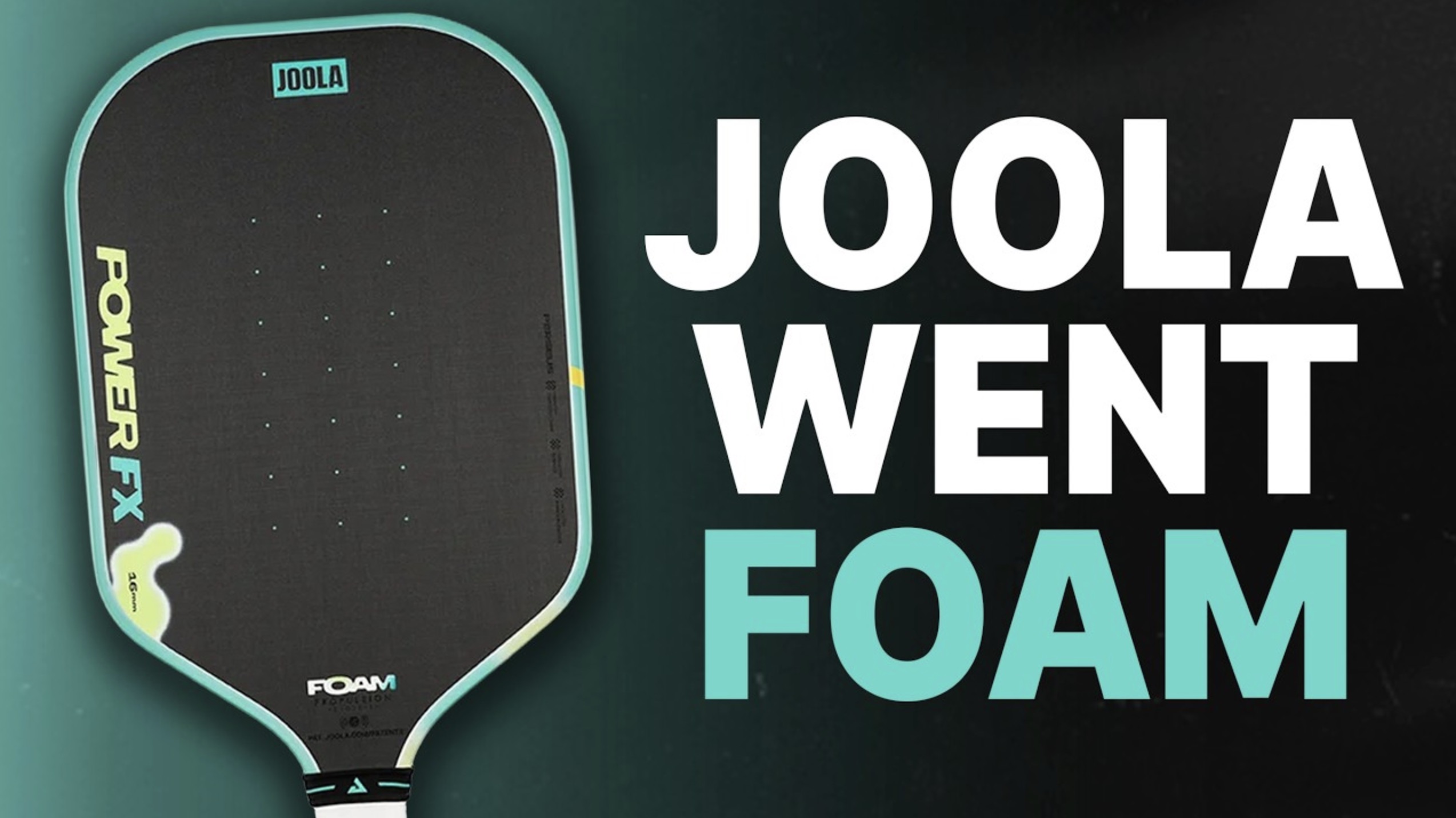
Full-foam paddles have flooded the market since last summer, but the Reserve Honeyfoam has a unique design that gives it a much more plush feel on contact than many existing foam paddles, which can feel stiff and harsh compared to prior paddles that used a polypropylene core.
Here’s a look at what’s under the hood:

The most important thing to note with this design: The inner EPP layer extends down into the throat area and the handle. This is a key difference from some other foam paddles on the market (like the Selkirk Boomstik and Bread and Butter Loco, which have the inner foam completely enclosed, with the EVA perimeter ring forming a boarder around the entire core).
In my experience, paddles that have the full EVA ring around the core can feel more stiff, due (I think) to the core being completely disconnected from the handle and by extension your hand. Because of that, they don’t seem to offer as much feedback after shots — it’s actually hard for me to tell sometimes where on the face I contacted the ball because off-center hits feel the same as when I hit the middle of the paddle.
Theres two ways to look at that: Either the paddle has a big sweet spot because performance doesn’t change much on off-center hits, or the paddle has a non-existent sweet spot because I’m not really getting any added benefit in feel or performance when I hit the middle of the face.
Paddletek addresses this issue by stopping the EVA ring at 4 and 8 o’clock in the Reserve Honeyfoam paddle. This is similar to what many companies did with Gen 3 polypropylene paddles, and it allows the core to flex more toward top of the paddle like a diving board, giving players more power on full shots, like drives and overheads.
That type of design also seems to offer a more smooth and connected feel on contact, which allows me to feel more in-tune with the paddle and make minor adjustments to be more precise with my shots.
Note: The Enhance DUO uses a similar design (the EVA ring extends farther into the throat area, but still doesn’t fully close), and I also preferred that paddle to most of the other foam paddles that were released in 2025.
Paddletek Reserve Honeyfoam specs

How it plays
There are two versions of this paddle — a 14mm and a 16mm core.
I put both paddles through several hours of drills at the kitchen line, in the transition zone and from the baseline, as well as multiple 5.0+ play sessions. I also had a few 4.0-4.5 players in my area test the paddles and give me their thoughts.
In general, the 14mm is more lively and seems to flex a bit more on impact and offer a little more dwell time. That makes sense just from a materials standpoint … Thinner material = more flexible = more dwell and energy return to the ball when the core springs back (think diving board). Thicker material = less flex = more stable/firm feel on contact.
At the kitchen line: I thought both paddles were really easy to use at the kitchen line. The smooth and connected feel I mentioned earlier meant that I was able to be very precise with my dinks and flicks out of the air. Because of the added dwell time and liveliness on the 14mm, my attacks out of the air were especially good. I could get the ball to hold on the paddle longer, which allowed me to add spin and also be a bit more deceptive. The downside to the 14mm is it’s a little less stable on off-center hits, which showed up occasionally in hands battles when I didn’t connect with the sweet spot. Both paddles are on the lower end in terms of swingweight for an elongated model, so maneuverability was good for both.
In transition: This is where the 16mm has the advantage. It felt very solid on resets in this area of the court, especially after I added some weight to the bottom corners … I added a 5-inch strip of 1-gram per inch UDrippin tungsten tape at the throat/bottom corners. The 14mm wasn’t bad, but definitely was a little more touchy on resets. I’m interested to see if Paddletek eventually releases a widebody version of this paddle. I think a 14mm in a widebody or hybrid shape could give it a good combo of offense when you want it and defense/bigger sweet spot when you need it.
From the baseline: While both paddles performed well on drops, drives and serves, the 14mm definitely had the edge in this area of the court. Again, the added flex and dwell time led to more power and more spin. Drives were very consistent and dipping hard over the net, and I was able to be very precise with aggressive drops. This paddle also has an extra-long handle, which will be a good fit for players with a two-handed backhand. Connor Garnett and Riley Newman, who both recently switched from ProXR to Paddletek after the merger and both use a two-handed backhand regularly, have been using this paddle lately. I spoke to both players recently at the PPA Tour Masters, and they each had good things to say. Newman actually switched prior to the Daytona Beach Open in December, which was one of his best tournaments of 2025 — he finished second in men’s doubles with Noe Khlif.
Summary

I preferred the 14mm version of the Reserve Honeyfoam and would put it in the top tier of available foam paddles right now. I think it’s an improvement from many foam options we saw in 2025, and I think we will see more companies experiment with thinner foam cores this year. In every instance where a company has offered a thinner foam core — like the Six Zero Black Opal (14mm) and Proton Peacock (comes in a 13mm version) — I have preferred them over the other 15mm or 16mm foam paddles on the market currently.
I think that’s because they offer more power while also producing good dwell time, which is a good combo for my play style. The higher ceiling can also be harnessed by skilled players who know how to use the additional power effectively.
For players in the 3.5-4.5 range, the 16mm could be a better fit because it will play a little more consistently on off-center hits and it’s generally a more controllable paddle.