

Understanding the dead dink in pickleball: Why, when and how to use it
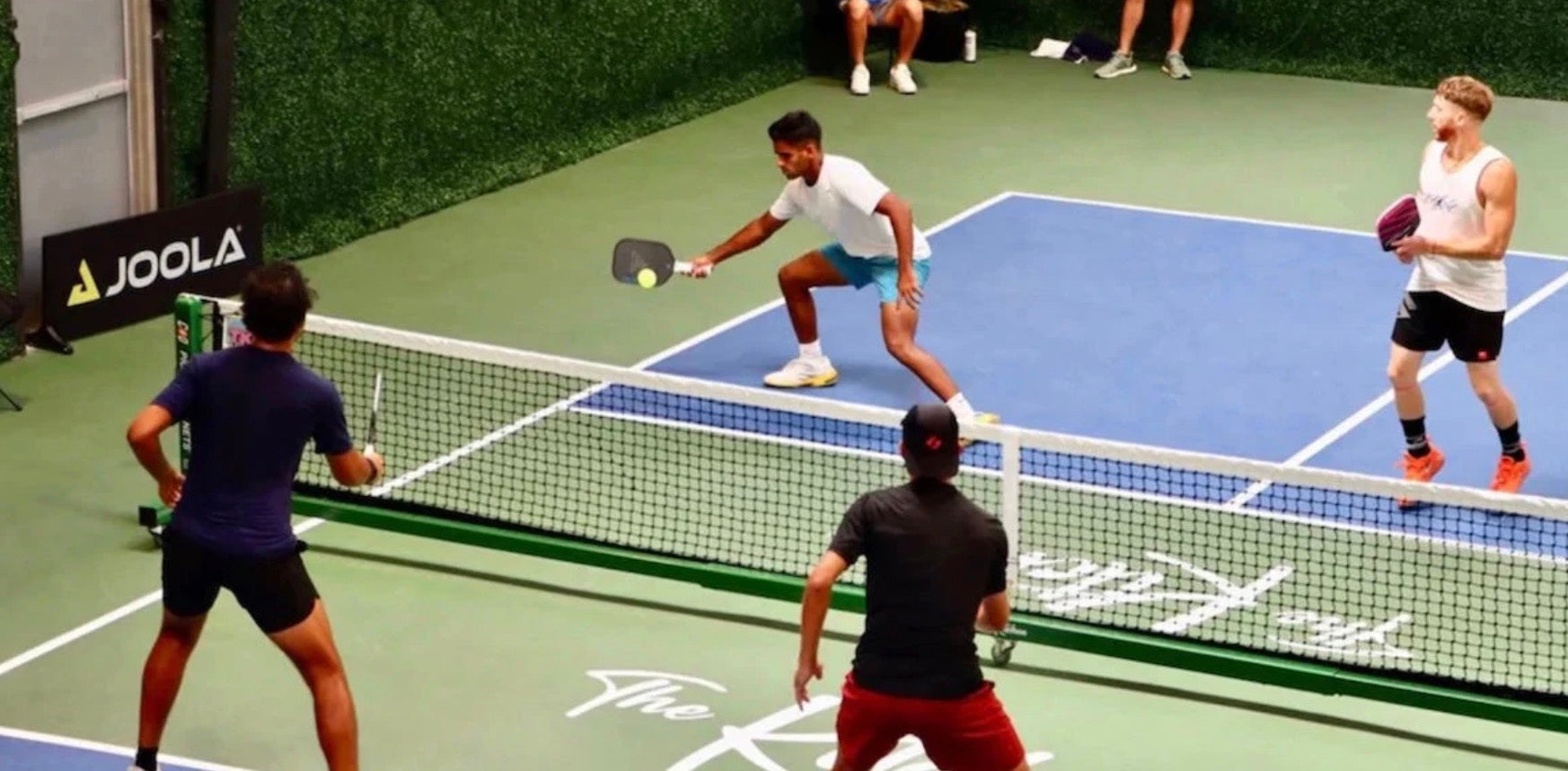
The “dead” dink is a misunderstood and wrongly maligned shot in our sport. It is one of those areas of the game where a few coaches and content creators created a stigma around a shot that is critical to good play and, in doing so, hampered the games of thousands of pickleball players. Let’s fix that.
First, what is a “dead” dink? The term is generally used to describe a neutral dink that gently floats up and over the net, then sits there. The thinking goes that this sort of shot should be avoided because your opponent is just gonna whack the ball at you. This leads players to avoid the dead dink as if it were some sort of toxic shot.

This is flawed thinking. I am going to share with you why the dead dink is a good shot to have, when to use it, and some tips for making it better.
Why use the dead dink?
I think much of the resistance to the dead dink stems from it being clumped together with other shots, such as aggressive dinks or flicks. Why would I ever hit a shot that allows my opponent to take control of the rally? I want to be in charge and do not want my opponent to take control or attack me.
The dead dink, however, is uniquely designed to do one thing: Get you out of trouble. It plays this role way better than most other shots that players reach for when in trouble.
And … it respects the net. Here’s the thing: if you do not currently use the dead dink as part of your game, then it is likely that you are leaving too many balls in the net. See, the dead dink is, at its core, a tradeoff. You are opting to take the net out of play as much as possible in exchange for the risk of possible attack from the next shot by your opponent.
You are saying, “I will take my chances with a shot from my opponent rather than risk hitting it into the net.” And who would not want to do that? Last time statistics were compiled on this, the net was 100-0 against all comers. Your opponent? Something other than 100% would be my guess.
Before we move on to the “When” and “How” of the dead dink, this idea needs to sink in. It is about taking the net out of play as much as possible. It is THE reason to use dead dinks in your game.
Read next: The Kitchen’s top pickleball paddles on the market right now
When to use the dead dink
The dead dink is a purely defensive shot. This means you can use it whenever you are in trouble.
▪️ Pulled wide on a stress dink to the outside? Dead dink.
▪️ Attacked in the transition zone as you move from baseline to the kitchen line? Dead dink.
▪️ The third-shot drop is a defensive shot. Dead dink works like a charm.
The very reason a dead dink is even available to us is that we play a sport that features a Non-Volley Zone. The dink is the shot that takes full advantage of the NVZ and is, thus, fundamental to playing a well-rounded pickleball game.
The dead dink is not intended to be a rally ender. Rather, the dead dink acts as a rally extender. Your objective is to put the ball into play one more time, avoiding the net and, if possible, avoiding a shot that your opponent can attack. The dead dink can help you accomplish those objectives.
Extra coaching tip: The dead dink is a shot you can hit at any time. While there may be a better shot available in a given situation, the dead dink is never wrong. So, if you are ever playing and are not sure what to do, reach for the dead dink. You will extend the rally, allowing you to find a better place from which to develop your game.
I am not suggesting that you dead dink for the sake of dead dinking. But … whenever you are in trouble, the dead dink can be your savior. You will be amazed at how often using a dead dink leads to you winning a rally, either from an opponent’s error on their next shot or later on in the rally.
NOTE: If you are a TPS or Camp student, the dead dink is what we call the three-year-old dink.
The RPM Friction Pro V2 just cracked our Top 5 paddles on the market right now — use code “KITCHEN” for 15% off at checkout.
RPM Friction Pro V2 16mm Elongated (James Ignatowich signature)
RPM Friction Pro V2 14mm Elongated (Ryan Fu signature)
How to execute the dead dink
By now, you know that a central tenet of the dead dink is net clearance. And the dead dink takes advantage of the Non-Volley Zone. These two facts are central to the shot we will hit.
1. Aim the dead dink to travel up and down. I like to think of the shot as looking mountainous – more like an alp than a foothill. Up and down. If you prefer geometry, think parabola. You are trying to get the ball to drop inside the NVZ. At a minimum, you want the ball to drop so that your opponent has to hit the ball from around or below their waist and cannot just smash the ball at you. Keep in mind that popups are not from shot height. Popups are from shot depth.
2. The apex (highest point) of the parabola will be on your side of the court and will move back with you. The farther from the net you are, the farther the parabola apex will be from the net. On a third-shot drop, the apex of the parabola is behind your NVZ line.
3. The farther away from the net you are, the higher the shot.
4. The more trouble you are in (the higher the stress you are under), the higher the shot.
Extra coaching tip: To further reduce the chance of a successful attack against your dead dink, you can aim it toward the middle of the court (between your opponents). Practice hitting the shot toward the “T” made by the centerline and NVZ line.
It is great to see online content starting to swing the other way on the dead dink. We have been advocating for this shot for years, and it was a lonely place to be. Incorporate more dead dinking into your game. You will last longer in your rallies and likely win more of them.
If you’re looking for more insights into high-level pickleball, the Better Pickleball Academy has you covered. You’ll also gain access to their easy to use “BP Play Guides” including middle dinking patterns and more. Use code “KITCHEN26” at checkout for a special offer just for Kitchen community members (3 months for the price of 2).
Tony Roig is a nationally-recognized coach, Sr. Pro Player, developer of “Respect the X” on the In2Pickle YouTube channel, and the voice behind the Pickleball Therapy podcast. Visit BetterPickleball.com for information on coaching from Tony and the BP team through their Camps, Academy, and No. 1 online training program: The Pickleball System.