

Hot take: You probably don’t actually need a third-shot drop
This article applies to the majority of pickleball players (72% based on DUPR ratings).
Before you shut down your computer (or phone) screaming “heresy!” … hear me out. I do not offer this coaching advice lightly. After all, it runs directly contrary to the general consensus.
The third-shot drop is the quintessential pickleball shot. From the first day you start playing pickleball, all you hear about is how you need this shot called the third-shot drop. And so you work on it, trying to develop that perfect shot parabola that allows the ball to drop harmlessly into your opponent’s non-volley zone.
 When it’s ready, you unveil it. Now that you have the “perfect” third-shot drop, you’re ready to take on the world. But your results don’t change. Not really. Why is this shot, that you worked so hard to develop, not having the impact you had hoped for?
The answer is relatively straightforward, but not easy to see unless you zoom out and use the framework of the game as your perspective.
Why hit a third-shot drop?
The third-shot drop isn’t fun. No one wants to hit it. Not me. Not you. Not the pros. So why do we hit this totally unfun and difficult shot to begin with? Knowing the answer to this question sets up the deeper exploration about whether we need the third-shot drop – or not.
Coaching tip: By looking at pickleball through its framework (as we’re doing here), you can reach correct and more complete answers to pickleball questions. If you have not yet embraced framework as part of your approach, I recommend you give it a go.
Pickleball’s framework – our launching point: Pickleball is a game built around a positional imbalance between the two teams – the serve team and the return team.
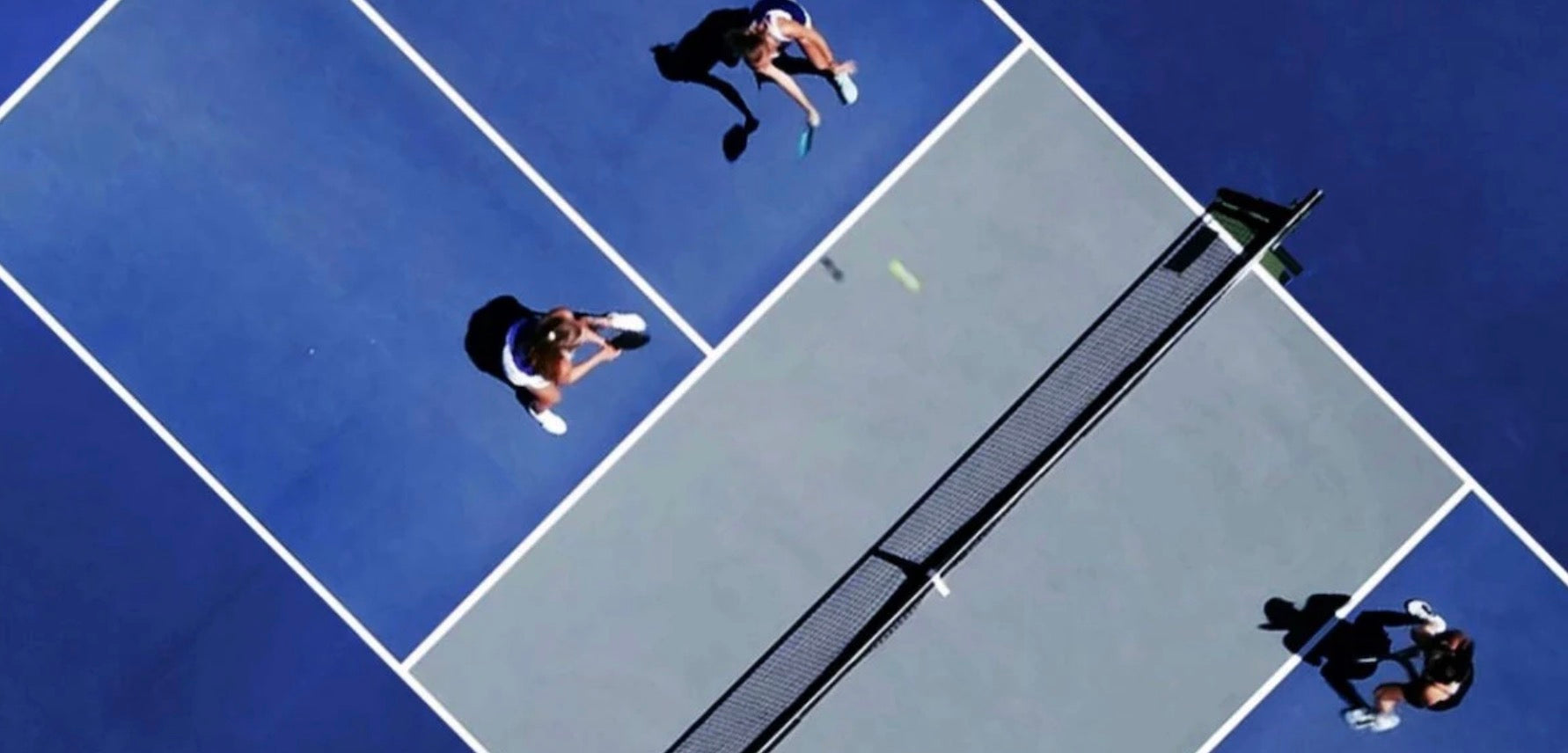
Because of the 2-bounce rule, the serving team starts every rally pinned back at a positional disadvantage. Meanwhile, the returning team gets to take the “high ground” (the kitchen line) relatively unimpeded, thus enjoying a positional advantage.
When we are on the serving team, it would be better to “duke it out” with our opponents from that same high ground. But to get up to the kitchen line, we need to cross the transition zone. Movement through the transition zone is often the most difficult phase of any rally because we are out in the open and vulnerable to attack.
Read next: The Kitchen’s top pickleball paddles on the market right now
This is where the third-shot drop shines and why it is commonly considered one of the most important shots in pickleball. The third-shot drop takes advantage of the structure of the game to help us accomplish our strategic objective of getting to the line.
More specifically, the third-shot drop utilizes two court characteristics — the non-volley zone and the net – to create an environment for safe forward movement through the transition zone.
Why it works (at higher levels)
The third-shot drop is aimed to land in the opposite non-volley zone. When the ball is deposited there safely, we are protected from a high to low attack and have a shield (the net) that protects our movement toward the line.
So, why wouldn’t you need a third shot drop? This next part may come across as harsh, but I promise it is not intended to be. It’s just reality. And, as a coach, my job is to keep us in the real world so that you can make real progress.
A third-shot drop is of limited use until you know how to use it and can take full advantage of its strategic value. This is because the third shot drop is only one piece of a much more complex puzzle – getting from baseline to the kitchen line, or successfully navigating the transition zone.
I am sure that when you first started playing pickleball, someone who had been playing longer than you explained to you (wrongly, as it turns out) that when the third shot drop is hit, you need to run up to the kitchen line. Right away.
It is a pervasive pickleball myth: if you hit a good third shot drop, you are rewarded with a trip to the kitchen line. This is incorrect. Thousands of rallies are lost (and players hit with smashed balls) each day across the world because of this bad advice.
The reality is that there is a lot more to the story than “Run up on the third shot.” Even a well hit and well placed third shot drop does not necessarily get you forward in one fell swoop. Rather, the serving team’s players need to read the shot correctly and then move in an orderly manner to get to the line, often having to stop at least once in the transition zone to hit a fifth-shot drop.
Just watch the top pros. While there are times that one of the two players makes it up to the line by the fifth shot, many rallies involve multiple shots before the players successfully get to the line. And they are the best in the game.
How is it reasonable to expect a rec player to immediately gain the kitchen line on the third shot?
How points are scored at the 3.5 level
In reviewing matches at the 3.5 level, even gold medal matches at major tournaments, it is clear that the players are usually not well versed in all the pieces necessary to capitalize on an effective third shot drop to advance to the kitchen line.
No criticism of the players — they are hitting the shot that has been drilled into their heads since they started playing. They believe that hitting that shot will help them. And why should they not believe that? It is “common knowledge” that the third-shot drop is the key to scoring points.
Below is a look into the numbers. They show how points are actually scored at 3.5 tournament-level play. These are combined numbers from two 3.5 level gold medal matches at the U.S. Open (2023 and 2025) in Women’s 55+ doubles:

In these two finals matches at a major tournament, a successful third shot drop contributed to only 13% of the total points scored. By extension, 87% of the total points scored did not rely on the third shot drop for the serve team to prevail.
You can check out my analysis of the above matches and see how the Men’s 3.5 team scored points in their gold medal match inside our most recent YouTube Video at In2Pickle.
You do NOT need a third shot drop until 4.0+ level play
Players competing in 3.5 level medal matches at big tournaments represent the best players at their level in the country. If the third shot drop is not materially helping these players, then we can safely conclude that the third shot drop should not be a player’s focus at, or below, 3.5-level play.
I would go one step further and propose that a third-shot drop focus is not necessary until a player is nearing 4.0-level play. In addition to video analysis of tournament play, this position is supported by my personal observations of rec play throughout the country.
If not the third-shot drop, then what?
There are two areas you can focus on to score more points and one area you can focus on in order to avoid losing the game before you can win it. Let’s start with not losing because it is really hard to win a game when you lose it before you even had the chance to win.
Just under 30% of the total points scored in the above 3.5 tournament matches were the result of missed returns of serve. Want to radically improve your play? Spend more time on your return of serve than your third-shot drop.
It may not be as “sexy,” but it’s way more important to your results.
Now how to score more points:
1. Get good at reading and attacking short returns of serve. You do not have to hit a fancy shot. Recognition and timing are more important than shot quality.
Extra coaching tip: At our camps we teach our students a “push” shot that works great at exploiting early scoring opportunities. Fancy? No. Effective? You better believe it.
2. Learn to stay alive longer. Extending the rally often has more to do with your court position than the precision of the shot you (or your partner) hit. Focus on maintaining a strong defensive position until the opportunity to move forward is clear. Keep in mind that navigating the transition zone is the single most difficult thing we do in pickleball. With that in mind, give yourself grace whenever you are unable to successfully navigate it.
Conclusion
We started this conversation by suggesting you STOP with the third-shot drop. This holds for all players who have not yet reached a 4.0 level of proficiency. Once you are around a 4.0-level player, then a good third-shot drop will become relevant to your game moving forward.
A key takeaway from this article is that your improvement is dependent on mastering the shots and concepts that matter most to you RIGHT NOW.
Two reasons:
1. These shots will have the greatest immediate impact on your game where you are right now.
2. You need these shots in any event to be a complete pickleball player.
The return of serve suggested above is a great shot to focus on. You will not believe the gains from just having a consistently better return. And you need a good return if you hope to keep advancing in the game.
If you’re looking for more insights into high-level pickleball, the Better Pickleball Academy has you covered. You’ll also gain access to their easy to use “BP Play Guides” including middle dinking patterns and more. Use code “KITCHEN26” at checkout for a special offer just for Kitchen community members (3 months for the price of 2).
Tony Roig is a nationally-recognized coach, Sr. Pro Player, developer of “Respect the X” on the In2Pickle YouTube channel, and the voice behind the Pickleball Therapy podcast. Visit BetterPickleball.com for information on coaching from Tony and the BP team through their Camps, Academy, and No. 1 online training program: The Pickleball System.