

Step-by-step guide to building your own pickleball court — full cost breakdown
This page contains affiliate links. The Kitchen may earn a commission from purchases at no extra cost to you.
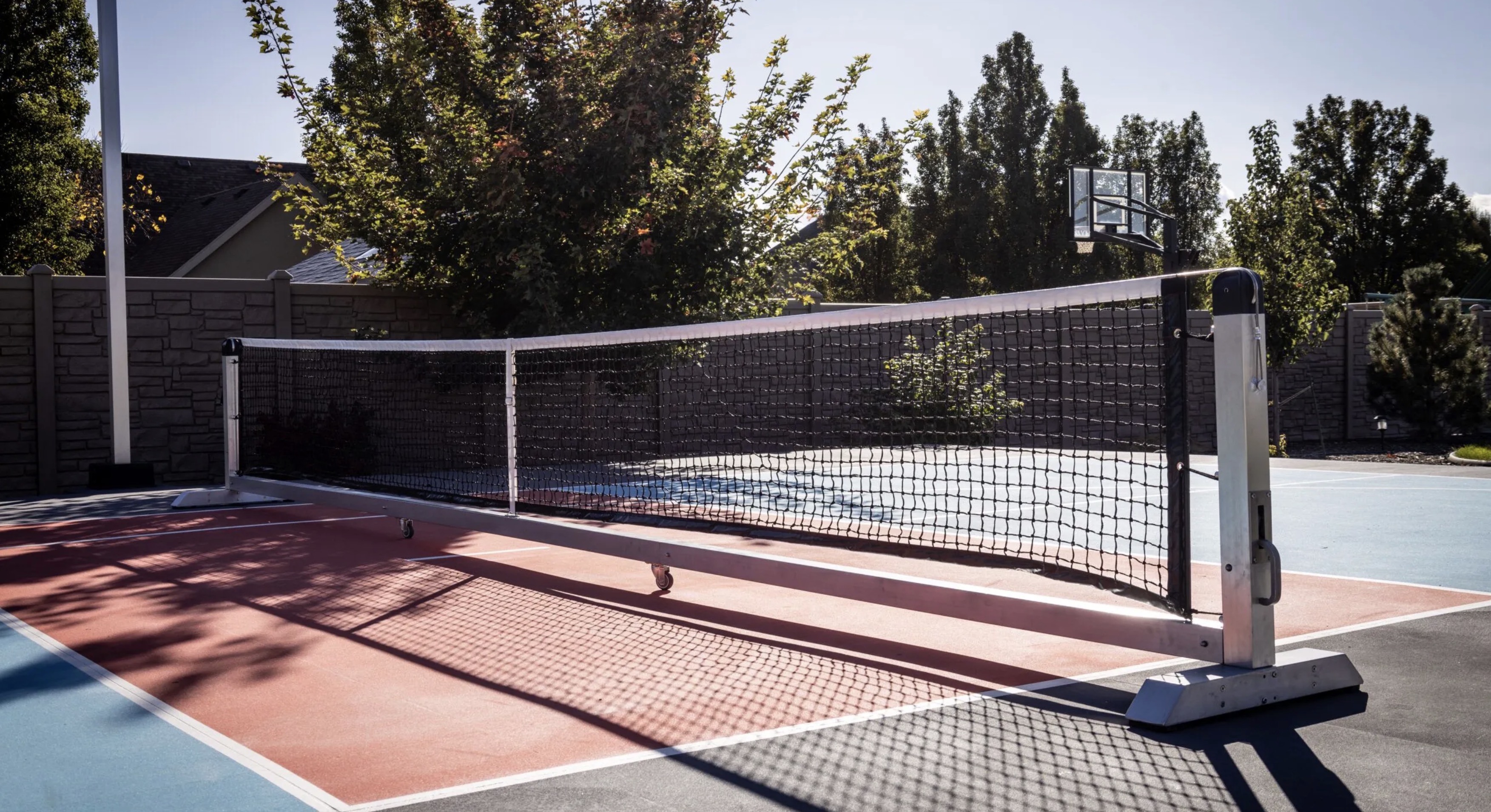
As pickleball has grown in popularity over the past decade, there’s been a huge increase in the number of homeowners building backyard courts.
But there are several things property owners and project managers need to be aware of before they embark on the project.
Let’s start with this: It can cost anywhere from $35,000 to $80,000 for a standard, high-quality court — but the final price depends on several key factors.
Below you’ll find a complete breakdown of each step, including spacing recommendations, surface materials, nets, lights and fencing.
Recommended space for a pickleball court
The pickleball court itself is 20 feet wide x 44 feet long, but there needs to be a buffer of space on the sidelines and baselines.
- 30 feet x 60 feet is the most common size and is sufficient for most recreational play.
- Some facilities opt for 34 feet x 64 feet for a championship court feel.
- That small size increase alone can add $5,000–$10,000 to your total cost.
Base material: Post-tension concrete vs. asphalt
A court’s foundation is one of the most critical decisions affecting price, durability and wear-and-tear on the body.
- Post-tension concrete (best choice): This is the most durable option, but also the most expensive.
- Rebar-reinforced concrete (a solid option): Less durable than post-tension concrete, but still long-lasting.
- Asphalt (budget option): Cheaper upfront, but requires more maintenance over time.
Surfacing: Standard vs. cushioned acrylic
Your playing surface impacts several factors: Cost, playability and physical comfort.
- Basic acrylic surfacing: $5,000–$7,000, but slightly harder on the body.
- Cushioned acrylic surfacing: $10,000–$15,000, features a noticeable difference in joint comfort (easier on the ankles, knees, back, etc.)
- Modular interlocking tiles: $15,000+, but isn’t the best for overall playability.
Fencing options: Materials & height matter
Fencing costs vary wildly depending on material, height and quality.
- Basic chain-link fencing (4 feet high): $35 per linear foot.
- Premium vinyl-coated fencing (10 feet high): $125 per linear foot.
- A full perimeter fence can add $5,000–$15,000 to your project.
Pickleball nets
If you’re going to spend the money on a home court, we highly recommend getting a quality net that will stand the test of time and offers great playability. Trust us, it’s worth the extra cost in the long run.
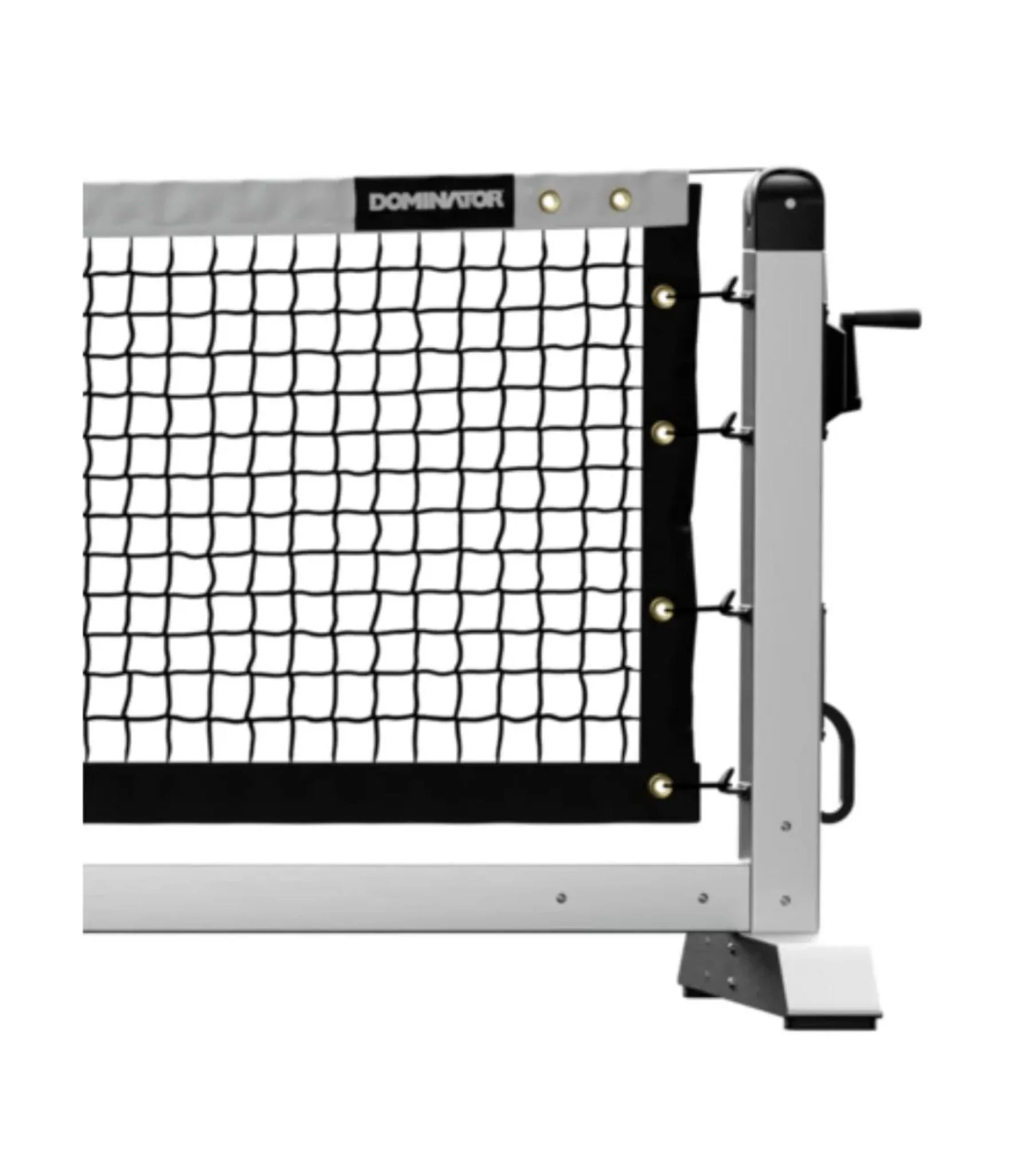
Dominator Pro Max Rolling Portable Pickleball Net
Use code “KITCHEN” for 10% off.
This is the net that is used for the four PPA Tour slams each year as well as all Major League Pickleball events.
It’s rust-proof and heavy duty, with built-in locking wheels for portability – ideal for competitive players who want a premium experience.
▪️ Designed to last for indoor and outdoor play.
▪️ System is made of high-quality 6061 T6 aluminum (same material that is used in aircraft, automotive, and watercraft manufacturing).
▪️ Sturdy aluminum structure & completely weather resistant.
▪️ 3-inch thick heavy duty aluminum square rust proof frame and stainless steel hardware.
▪️ Limited lifetime warranty.
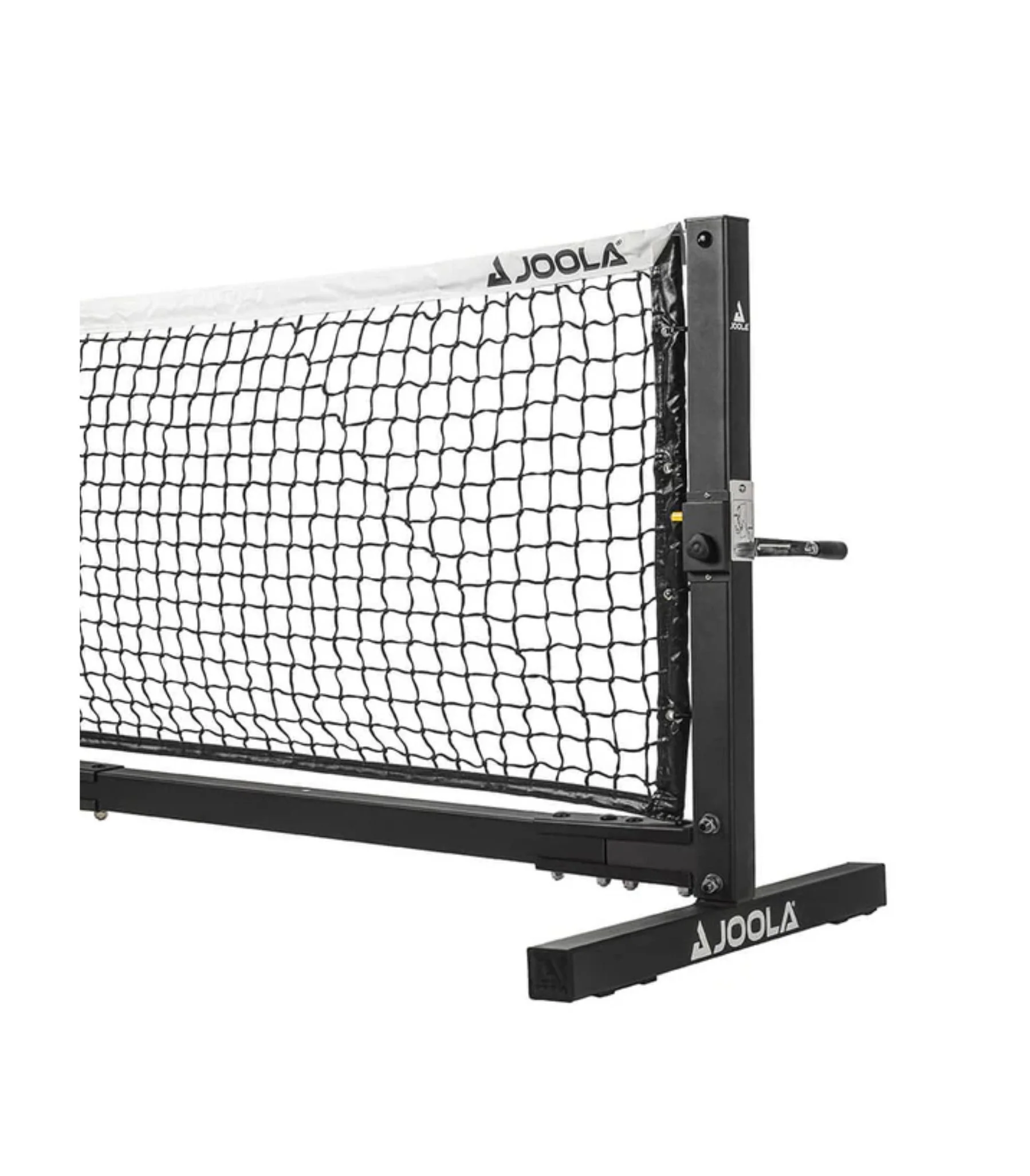
JOOLA Pro Pickleball Net (S)
The JOOLA Pro Pickleball Net (S) is a semi-permanent, heavy-duty pickleball net ideal for racket clubs and backyard courts alike.
▪️ Large 60mm powder-coated steel frames and legs allow the net to play similar to an in-ground pickleball net.
▪️ This effect is doubled with the heavy-gauge steel cable tensioning system. Using the hand crank, the system makes it quick and easy to get the regulation 36 in. height at the sides while the center strap ensures the middle reaches the regulation 34 in. mark.
▪️ The top vinyl strip maintains durability but also provides the playability pickleball players expect at tournaments and top tier clubs.
▪️ Rubber pads protect the court surface under each of the legs.
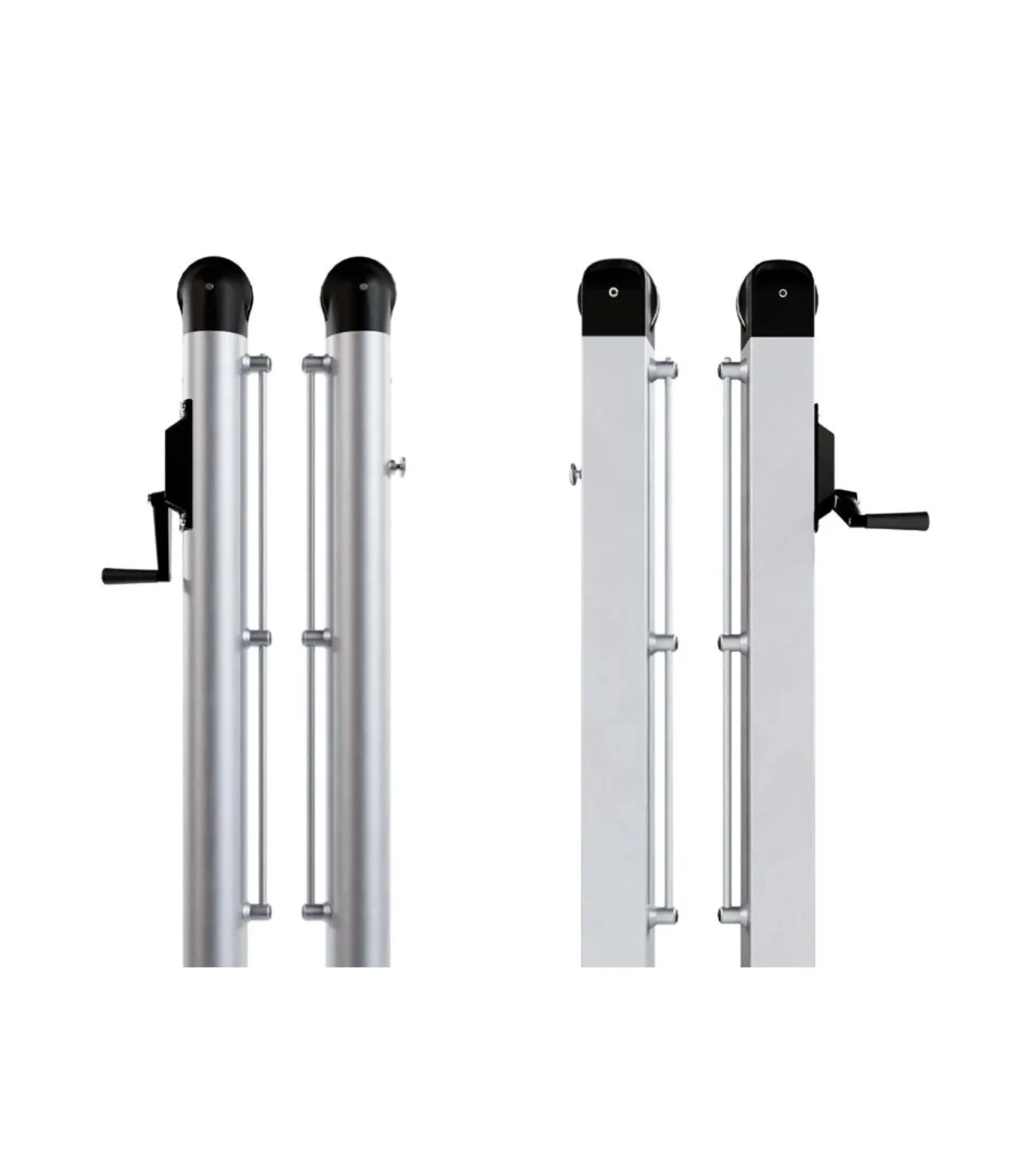
Dominator In Ground Pickleball Posts & Nets System
Use code “KITCHEN” at checkout for 10% off.
The Dominator Heavy-Duty Inground Pickleball System is a completely rust-proof aluminum inground pickleball net system that meets USA Pickleball official regulations. Each post comes with a separate sleeve that is permanently set in the concrete allowing the pickleball posts to be removed from the ground when not in use.
Whether you choose our square or circle model, you can be sure that the posts are Dominator quality.
Court lighting
Dominator has been outfitting backyard courts — basketball, tennis and pickleball — with lights and other accessories for decades.
- Dominator 150W LED Light ($250 per light): Designed to be the ultimate driveway or backyard court light. Each light fixture is coated with a black anodized finish which makes your driveway or court look professional while also preventing corrosion and color fading. A single light fixture will provide your court with roughly a 30 x 30-foot area of coverage. Mounts onto Dominator’s aluminum light pole.
- Dominator 100W LED Solar Light ($936 per light): Each light covers a 40 x 50-foot area. Charge time of 8 hours, run time of 12 hours. Mounts onto Dominator’s aluminum light pole.
Shop all Dominator pickleball nets & lights here — use code “KITCHEN” for 10% off
Site conditions & location
This depends a lot on what your backyard currently looks like.
- Flat, easily accessible land = lower costs
- Hilly terrain or poor soil conditions = higher excavation costs (can double or triple your budget!)
- In some areas, you may need soil stabilization or drainage solutions, which can cost $10,000+ extra.
Build more, save more
If you’re building multiple courts, you save money per court by reducing mobilization and labor costs.
Total cost to build a pickleball court: The breakdown

Is building a pickleball court worth it?
Absolutely — if done right.
Post-tension concrete is the best long-term investment for durability, but location and budget constraints might make asphalt a more viable option.
Related: Cheap pickleball courts are actually the most expensive. Here’s how to do it right.
In the end, home pickleball courts are just like the home itself — your total cost depends on your choices and priorities. Whether you’re building a single backyard court or multiple courts, understanding the costs upfront will help you make the best decision.

You Might Also Like