


This is the No. 1 reason you’re losing points in pickleball. Here’s how to fix it
Let us know if this sounds familiar: You’re a few shots into a dink rally, and you’re focused on keeping the ball low so your opponent can’t attack. Then your shot goes straight into the net.
It feels like a mishit, but the mistake may have happened before you swung — you picked a target that gave you almost no room to miss.
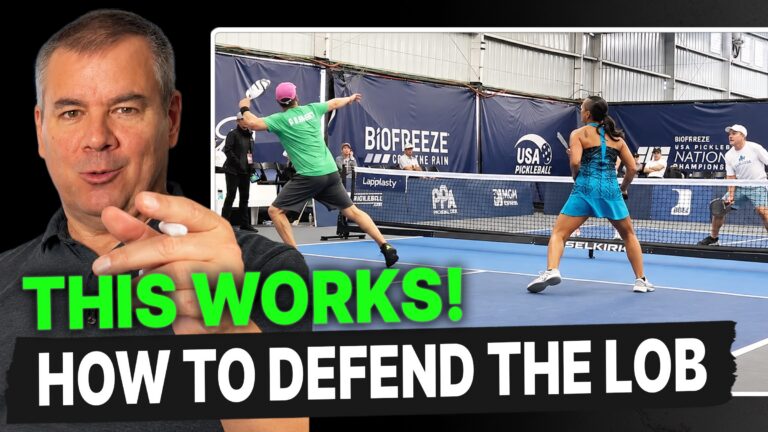
In this video, Coach Tony Roig explains how a little more clearance can keep rallies alive without giving your opponents an easy ball to attack.
Sign up for a Tony Roig Pickleball Camp today!
TRP Camps offer a transformative camp experience designed to tap into your pickleball game at a deeper level. Take your next step forward and let the TRP Coaching Team show you the way.
Find a list of all upcoming camp opportunities here.
Use code “KITCHEN” at checkout for 10% off your camp enrollment.
Give your dinks room to clear the net
Picture two dinks. One barely clears the tape but carries far enough for your opponent to take it out of the air. The other travels in a higher arc and lands halfway into the kitchen. Roig would take the second ball. It has more room to clear the net, and if it lands far enough in front of your opponent, they’ll have to let it bounce.
The height that matters to your opponent is the height at which they can actually make contact. A dink can be well above the tape as it crosses the net and already be dropping by the time it gets within reach. When you add height, keep the pace soft enough for the ball to land shallow. If it keeps floating toward the kitchen line, you’ve given your opponent a chance to volley it.
The Kitchen’s 2026 holiday gift guide: Our top picks for pickleball paddles this holiday season
Watch what happens after the bounce
If a dink has a little more arc, won’t it sit up after the bounce? Roig tests that by holding a Franklin X-40 as high as he can and dropping it halfway into the kitchen. Even from that height, the ball rebounds to roughly net level. The ordinary dinks he demonstrates afterward bounce lower.
That low contact makes a big difference. If your opponent lets a shallow dink bounce and meets it below the tape, they have to lift the ball to clear the net. That gives them less room to swing hard and still keep the ball in the court. Watch where your opponent contacts your dink. If they’re reaching forward and hitting up, your shot is doing its job.
Keep the dink simple
For most recreational players, Roig recommends a flat dink that lands short. A little slice can be useful at higher levels, where players are better at creating attacks off the bounce. Even pros hit plenty of dinks without adding slice.
Try it in warmups. Pick a spot halfway into the kitchen and hit a few dinks with more clearance than you usually give yourself. Watch where they land. If they’re reaching your partner in the air, take some pace off the next ball while keeping the same arc. If you’re still finding the net, aim a little higher and see whether the ball still drops short. Once you can do that consistently, try the same drill crosscourt.
The Kitchen’s 2026 holiday gift guide: Our top picks for pickleball shoes, bags, apparel, accessories and more
Aim higher when you’re farther back or under pressure
The same idea applies to serves and returns. From the baseline, give the ball a bigger window over the net while still aiming into the correct service box or toward your return target. Roig also recommends adding clearance when you’re stretched wide, late to the ball or otherwise on defense. Give yourself a target you can hit from the position you’re in.
The next time you put a routine ball in the net, think about where you were aiming. If you were trying to skim the tape, give your next shot a little more air. At the kitchen, pair that extra height with a shorter landing spot. You can keep the rally going and still make your opponent work for an attack.
Tony Roig is a nationally-recognized coach, Sr. Pro Player, developer of “Respect the X” among other widely used strategies, and is the voice behind the weekly Pickleball Therapy podcast. To find out more about Tony and his coaching visit TonyRoigPickleball.com. You can access their 4 FREE Mini-Courses to get going.