

Pickleball will break your heart. It’s designed that way.
“You’ll have fun!”
“You’ll meet people!”
“You’ll compete again!”
All of those things are true about pickleball. But you also will get your heart broken. If you play long enough, it is inevitable.
I’m a clinical psychologist and a competitive doubles player, and after years of playing this sport and studying relationships, I’ve come to a conclusion that sounds dramatic until you sit with it: Doubles pickleball specifically is set up to break your heart. The format requires it.
And the strange, sad feelings you have when it does — the ones you’ve never said out loud because “it’s just pickleball” — are not a sign that something went wrong. They’re a sign you did it right.
Expert review: New Warping Point Nightblade lineup gives you two very different options
The sport makes you go deep on purpose
In order to get good at doubles, you have to read a partner — where they’ll be, what they’re setting up, whether that sigh was about your shot or their own. The only way to accurately read someone is to know them really, really well.
You can’t cover for someone you won’t lean on. You can’t build the shorthand that wins a big third game without letting them all the way in.
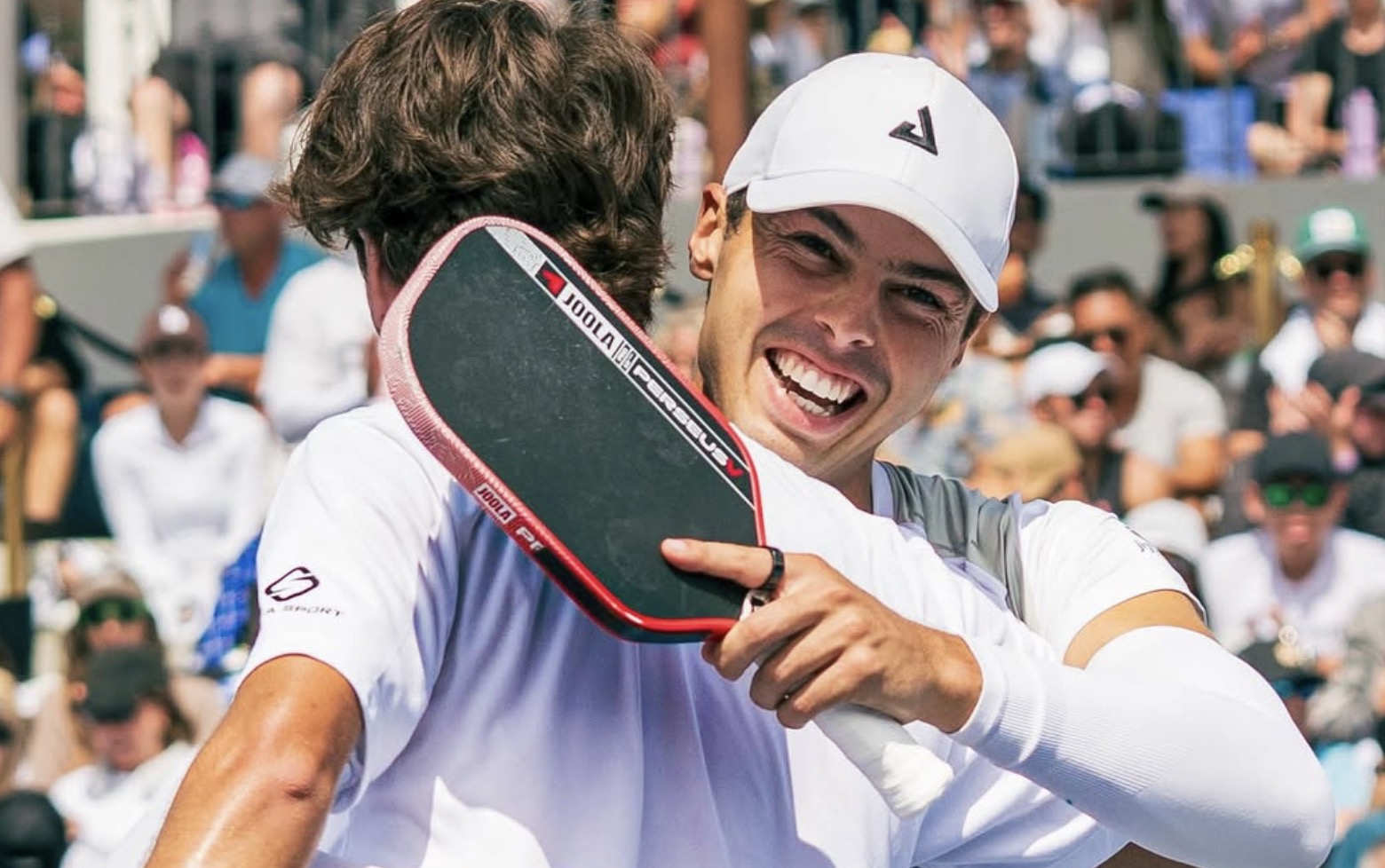
And you’re a competitor, right? So you do let them in. Over months of the same weird hour at the same courts, you learn what your partner’s face does after they miss an easy one. They learn what you do when you’re down 8–2. You develop rituals — a paddle tap that means next one, a look that means you’ve got this or, even better, “I believe in you.”
Someone starts a group chat. Someone always brings the speaker to the courts. And without ever deciding to, you’ve built something most adult friendships never get to: A relationship where another person has watched you under pressure, over and over, and stuck around.
That’s the thing people mean when they say they’re “addicted.” It isn’t the dinking. It’s that underneath the paddles and the scores, you feel alive and you feel connected — and those are two of the rarest feelings in adult life.
The depth isn’t optional. The sport extracts it. Which sets up the hard part.
Read next: The best pickleball paddles for maximum pop
It changes. It always changes.
Anything you build with other people changes. That’s not pickleball; that’s life.
But pickleball can make it happen faster and more visibly than almost anywhere else, because the sport has a one-seat rule — you get one tournament partner — and a rating system that quietly re-sorts everyone every few months.
So somebody’s job moves them three states away. Somebody’s knee gives out. A partner levels up past you and starts getting into the better games, and you’re happy for them and you miss them terribly at the same time.
Or — the one that really gets people — your partner starts playing with someone else, for good reasons or no reason, and now you get to watch them paddle-tap with the new person while you’re playing against them across the net. The relationship didn’t fail. It did exactly what relationships do.
But now you’re standing on the same courts where you felt most alive, and the thing that made you feel that way is gone, and you have no idea what to do with the feelings that show up next.
Read next: The Kitchen’s top paddles on the market right now + in-depth reviews for each one
The feelings nobody talks about
Let me name them, because almost nobody does. If you’ve had a partnership or a group change on you, see how many of these you recognize.
Jealousy: Real, hot, embarrassing jealousy — watching your old partner laugh with someone new and feeling something you thought you’d retired in middle school.
DUPR/Court Reserve/PlayTime Scheduler stalking: You know exactly what I mean. Checking their DUPR. Looking at the bracket. Scrolling to see who they played with Saturday. Doing the math on whether the new partnership is going better than yours did. Feeling left out. The Thursday game still exists. You’re just not in it. The group chat still goes off. Your name isn’t in the thread.
Wanting to quit: Not because you don’t love the game — because the game is now the place where the hurt lives, and quitting feels like the only way to stop walking into it.
Feeling lost: You used to know exactly where you belonged at those courts. Now you show up and don’t know which game to get into, and it feels like your first week all over again, except worse, because you remember what it was like to belong.
The courts as a reminder: The place that was the highlight of your week is now a place you brace yourself for. Same nets, same people, same sound of the ball, and none of it feels like yours.
Wishing every new partner was the old one: You try someone new and can’t stop comparing. They don’t know the paddle tap. They don’t know you take the middle. You’re grieving in the middle of a game and pretending it’s about the score.
Some of you are reading that list and feeling caught. EXCELLENT. Because every one of those feelings is a normal response to losing a real relationship. Jealousy, checking up on someone, feeling displaced, avoiding the places that remind you of them, comparing everyone new to the person you lost — those are the textbook aftershocks of a meaningful ending.
If a friend described those feelings after a breakup or a falling-out, you wouldn’t blink. You’d say, of course you feel that way. You loved that person. The only reason it feels shameful here is the sentence attached to it.
Read next: 5 new pickleball paddles that have impressed us recently
‘It’s just pickleball’
That sentence does a lot of damage. We say it to ourselves before anyone else can. It’s just a pickleball partner. It’s just a Tuesday game. It’s a sport with a neon plastic ball; I’m a grown adult; get over it. So the feeling goes somewhere else — into a joke about “pickleball divorce,” usually, or into nothing at all, or into checking your phone at 11 p.m. to see whether Saturday got organized without you.
But run the logic. Pickleball is a place where you feel alive. The relationships you build there are real — realer, in some ways, than the ones where you only see each other at your best. And when real relationships change, human beings have feelings about it.
You can’t have a “just” in front of the thing and a genuine relationship inside it at the same time. It’s one or the other. If the feelings are big, that’s your answer about which one it was. The grief isn’t disproportionate. The word “just” is.
The sadness means you’re doing it right
Here’s the reframe I most want you to leave with: The alternative to a partnership that can break your heart isn’t a safer partnership. It’s a shallower one. And shallow partnerships don’t just hurt less — they play worse. They lose the big third game because nobody let anybody all the way in. And even if you win that game, you’ve lost the bigger one: A real relationship with someone who wants the same things you do.
And if you ARE sitting with any of the feelings on that list, you didn’t take the game too seriously. You played doubles the way doubles is meant to be played. You went deep enough with a person to actually get good, and deep enough that it hurt when it changed. That’s not a mistake to fix. That’s the whole thing working.
Own the feelings. Say them out loud to one person — a friend, a partner, the group chat if you’re brave. Let yourself be sad at the courts instead of pretending you’re fine at the courts. Notice that “it’s just pickleball” is a sentence you’re using to avoid your own heart, and try dropping it for a week. Then go build the next one. Deep, again. Knowing full well what it costs.
Pickleball will break your heart. That’s how you know it was real.