

Pickleball instruction: Why you’re aiming your volleys all wrong
Do you have a target when you’re about to hit a pickleball shot? If you do, is there enough margin around your target? And are you feeding the information about your intended target to your processing unit (brain)?
If you answered “yes” to all of the above, then good job and have fun the next time you play. I am sure your volleys will be spectacular.
If you answered “no” to any of the above or if you’re wondering what the heck I am talking about, then read on. We have some work to do. And this work will radically improve how you hit your volleys — and ALL your shots.
Read next: The Kitchen’s Top 13 paddles on the market + in-depth reviews for each one
Your processing unit
Lift your right arm. Trust me. Just do it. OK – put it back down. Now close your left hand. Keep trusting the process. Furrow your brow in a “What’s happening right now?” kind of way. OK, the “fun moving our body” part is over. Now we think. How did you move your arm, hand and brow?
You moved them because you:
- Made a decision to move them.
- You clearly transmitted that decision to your brain.
I know that sometimes it can feel like we are all thumbs on the court. We can also feel “dumb” out there. Like we don’t know what to do. No matter. Let’s reset.
You possess the most powerful information processing unit ever developed. More powerful than the largest AI data center. It’s yours. The problem has been that you are not bringing the full force of your processing unit to bear on your pickleball. At least not in a constructive manner.
Let’s begin fixing that here. Believe it or not, the same way that you can lift your arm every single time you decide to do so, you can also hit your pickleball shots with the same confidence. You think “lift arm,” and you lift your arm. You think “volley over net,” and your volley is much more likely to go over the net.
Foundational Step: Acknowledge the existence and power of the processing unit between your ears.
Read next: The best pickleball paddles for intermediate players
Mental vs. Mechanical Error
Having a powerful processing unit is great. Now let’s put it to work for us. It will help us to do this with a specific shot. So let me set one up for us.
You’re up at the kitchen line. Your opponent floats a ball to you. To your favorite side to volley from, no less. You smack your lips as you raise your paddle up – ready to smash it down. Bam. You hit the ball … straight into the net.
The most common reaction to this is that we made a mechanical error in our volley, and if we want to get better, we need to practice our volleys. That way, the next time we get the same ball to smash, we won’t miss it. It’ll probably surprise you, but this is incorrect – most of the time.
More often than not, the reason for your missed shot was not mechanical. It was mental. Mental errors can come from one of three sources:
- No decision was made.
- A suboptimal decision was made.
- The decision was not properly transmitted to your processing unit.
We will tackle each of these below. But first, let’s clarify something: The sort of mental error I am referring to here is not the usual sort of mental error players think about.
This is not about loss of focus or not being in the moment. This is about the mental error of not putting your processing unit to work while you play. The more you activate your processing unit, the better you’ll play.
Let’s solve it.
RPM Pickleball: Full paddle lineup and reviews for each model (2026)
Step 1: The Decision
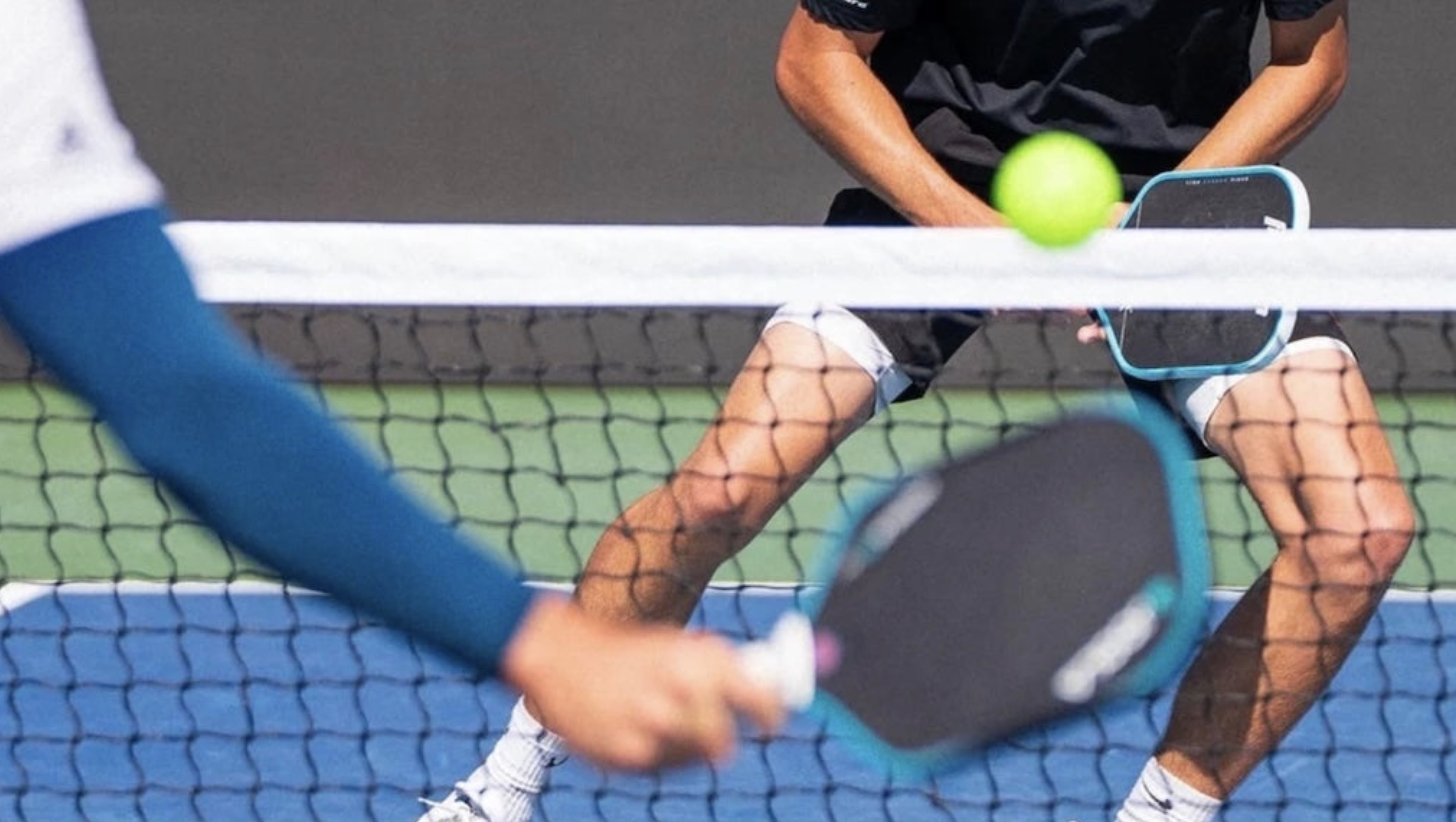
Step 1 in putting our minds to work for us is to make a decision. In the shot scenario we’re working on – a volley into the net – the decision we need to make is about how we are choosing to hit our volley relative to the net. More specifically, how high over the net do we want to aim the shot?
Whenever you hit your volley into the net, Question 1 should be: “Did I have an intended target for my volley over the net?” If the answer is, “No, I didn’t really think of that” or “I’m not sure,” then this is where you want to start.
Step 1: Simply make a decision to have a specific target over the net for your shots – including the volley.
Step 2: An Optimal Decision
The next step is to make the decision you made in Step 1 a good one. I am going to give you a target height for your volleys over the net. Are you sitting down? Minimum height to aim for: paddle width above the net. This target gives you a better margin for error – trust me on this.
Step 2: Pick a target over the net that gives you enough margin (cushion) for your shot. Use the one I shared with you above, or another target you choose.
Step 3: The Input
If you’ve bought into the Foundational Step and you’re taking Steps 1 and 2, you’re already far ahead of most players you’ll face. But to get the full benefit of Steps 1 and 2, you will want to complete the cycle with Step 3.
In Step 3, you will visualize the shot you want. Full visualization where you literally picture the shot you want in your mind. For the volley, you’ll “see” your volley travel about 7 inches above the net. Visualizing the shot is how you’ll input it into your brain.
It’s like showing someone a drawing of the shot and asking them to copy it. It may not always feel this way, but your brain is your ally. It would love to give you what you want – a net-free volley in this case.
The reason your brain sometimes has difficulty following your instructions is that you have not given it any. Your brain doesn’t know what it’s supposed to do to give you what you want. The clearer the instructions you give your mind, the better it will be able to deliver.
100% Control
I saved the best for last. You are 100% in control of these steps. Bears repeating: you are 100% in control of these steps.
No player — not even the pros — can 100% control where their shot will go. We are all human and subject to making mistakes.
But you can – 100% of the time – decide where you want to aim your volley, pick a target that gives you some cushion, and visualize your decision so your brain knows what you want. And that’s pretty freaking amazing.
If you enjoy this approach to coaching, join our TRP Community. It’s FREE. You get our weekly Coaching Digest as well as access to 4 (also FREE) Mini-Courses and other awesome coaching materials. You can join at TonyRoigPickleball.com.